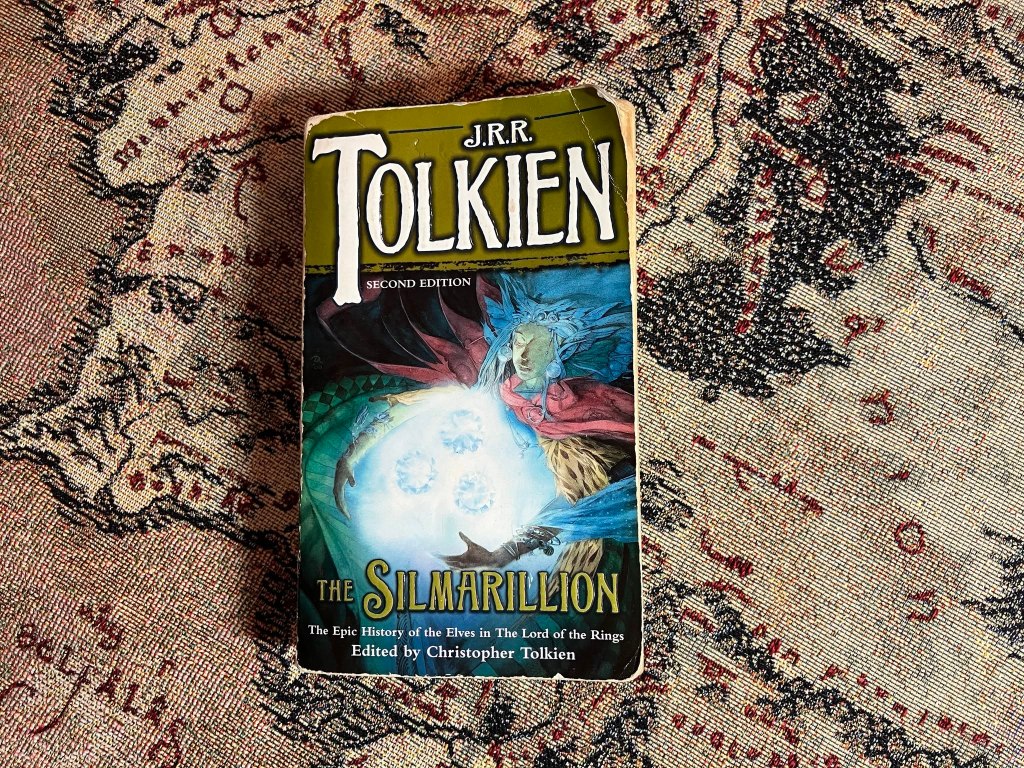
Today is the 49th anniversary of The Silmarillion. Next year is the big one!
Speaking of the Tale of the Silmarils and all things Elvish . . . You how Isildur is pronounced ee · seel · door, right? But wait, maybe it’s ih · sihl · door instead? That’s ee vs. ih. Surely only one of those can be right! Tolkien’s language by-laws are quite clear, aren’t they?
Not necessarily! Here follows a short but nerdy bit of Tolkien trivia. But first thing’s first: Full credit to my friend Chad Bornholdt, Elvish enthusiast/expert, who stumbled upon something recently.
Most fans don’t think too much about how to pronounce Tolkien names. That’s totally fine. It’s not for everyone, truly. When I say the name of my wife’s country of origin, I don’t say ar · hehn · tee · nah with that hard guttural “h” that Argentina’s own people do, so I won’t be arrested by the Elvish police if I pronounce the word Isengard like ee · sehn · gahrd, as Elves would (even though it’s actually Old English). Most people just say eye · zen · guard and call it a day.
Heck, even movie Legolas does, and he’s Elvish.
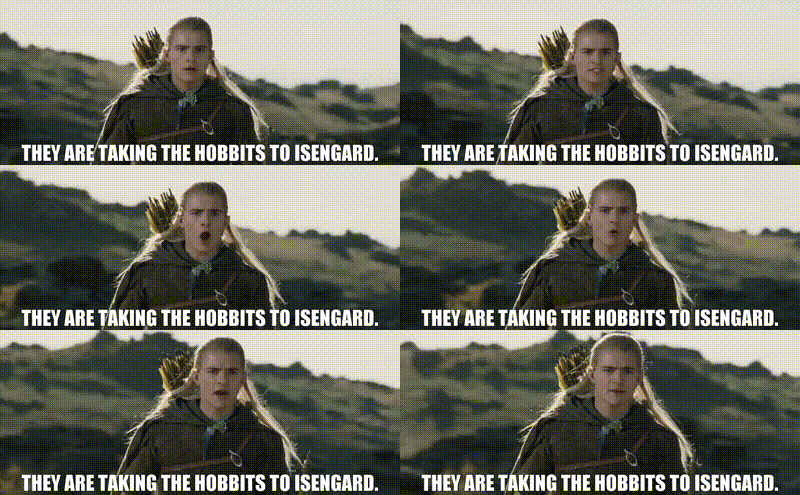
But that’s because the language consultants on the Peter Jackson films were not as thorough as you’d think (just as they aren’t in The Rings of Power, more’s the shame).
Per the rules Tolkien presented in the The Lord of the Rings, the vowel i in any Elvish word—or at least, any word pronounced an Elvish way—should sound like the i in the English word machine. See?
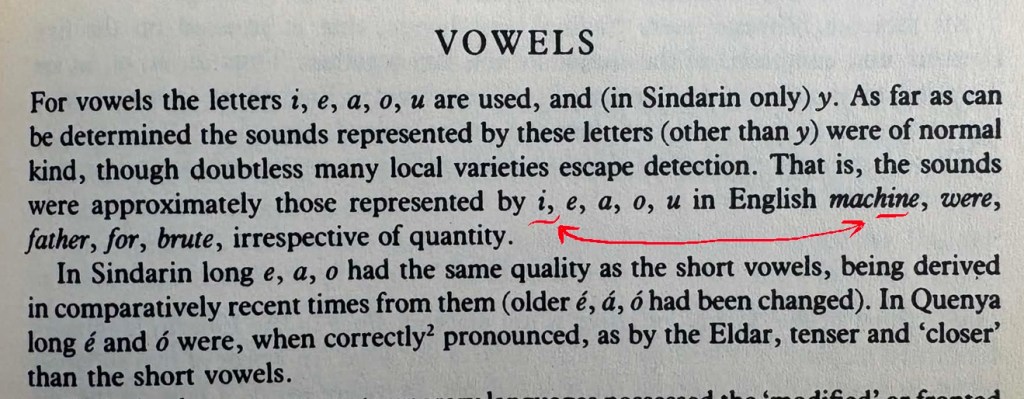
So Isengard is ee · sehn · gahrd. And the river that flows around it, the Isen, is ee · sehn.
Then there’re the Istari (the wizards), which most of us want to pronounce as ih · star · ee but by the Elvish rules should be ee · stahr · ee. Just as Isildur is properly ee · seel · door. And so on and so forth and what have you.
But Chad Bornholdt stumbled onto a contradiction that calls this into question, just a little bit. Tolkien does “change his mind,” sometimes, after all. Most of his contradictions are drawn from his many unpublished-during-his-lifetime writings, but a few can be found even from antemortem writings. Such as this one:
In 1967 a book was published called The Road Goes Ever On, which was a collection of sheet music for some of the poems in The Lord of the Rings. Such as Bilbo’s “I Sit beside the Fire” poem in Rivendell and Galadriel’s “Namárië” lament the Fellowship hears when they’re leaving Lothlórien.
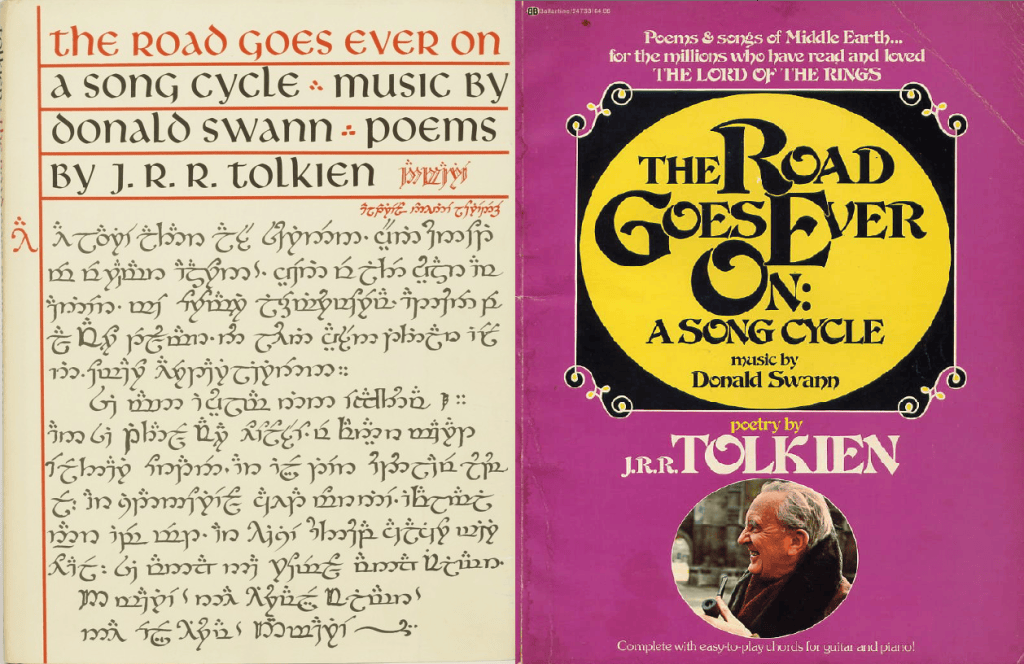
But Tolkien didn’t just say “Sure, you can use my poems for your songbook.” He also nerded out like the philologist he was and provided all the pronunciation rules and poetic disclaimers to go with the poems. They’re intense, and it takes a next-level nerd like Chad to properly suss out the details. I’m not normally that level of nerd; I’m more of a lore and story geek. But I do find this stuff fascinating and I dabble with it. I had to pay a lot of attention to pronunciations when writing The Silmarillion Primer, since I took an educated stab at providing a “close enough” pronunciation for all the Elvish words that come up in that book. With Chad’s help.
Anyway, in the songbook, Chad noticed the following passage in the entry for “A Elbereth Gilthoniel” (the song Frodo hears in Rivendell), which means “O Elbereth Star-kindler,” a reference to the Elves’ favorite Valier, who is primarily known as Varda.
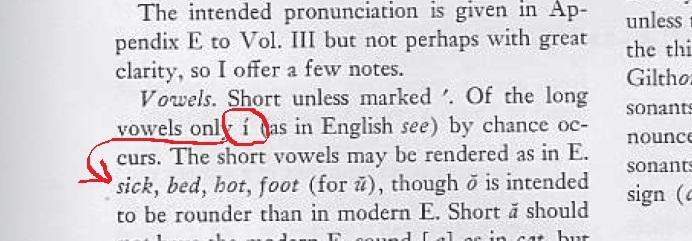
Well, crap. Here Tolkien is saying that the i in Elvish words “may be rendered” like the i in the English word sick.
Dang it, Tolkien! It’s almost like you don’t want us figuring this stuff out! Which it is? Is the i sound like the i in machine or like in sick? Should I be pronouncing Imladris (Rivendell) like eem · lahd · rees or like ihm · lahd · riss? You know who else wants to know? Idril (Elrond’s grandmother), Ilúvatar (the One, the big boss of the universe), Indis (Noldorin queen), and Ingwë (king of the Vanyar) from The Silmarillion. Just for starters!
This would be much easier to dismiss if the British pronounced the word sick differently than us colonials.
Anyway, “Happy Silmarillioversary!” to all who celebrate. Go say something Elvish to someone today, any which way you feel like it. By the way, most of the Elves would just call Isengard Angrenost, anyway. That’s Sindarin for “Iron Fortress,” from angren (“of iron”) + ost (“fort, stronghold, enclosure”).
 Foreshadowed and Foresung