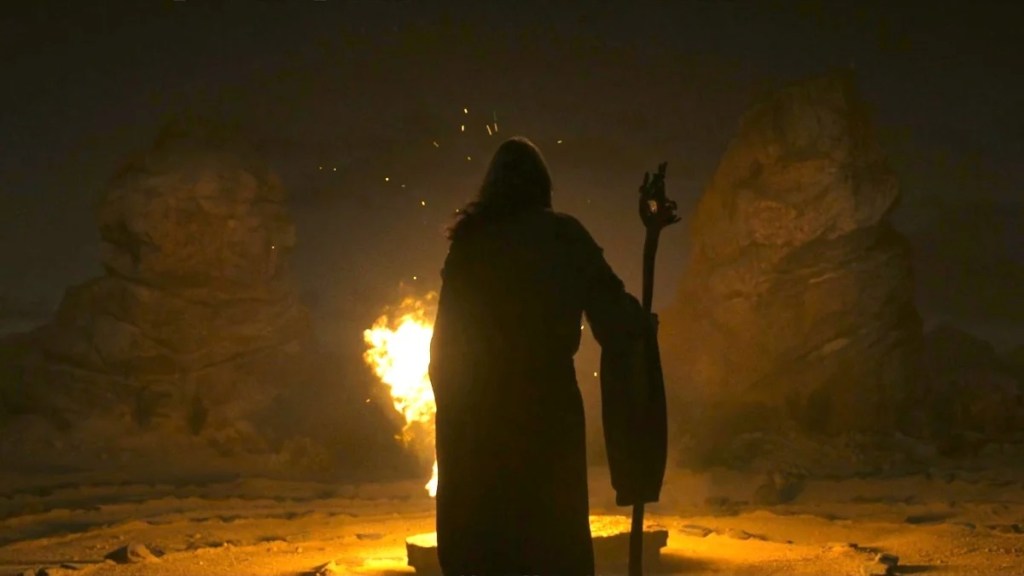
One of my heroes, the late Neil Peart of Rush, was famous for this mantra: “What is the most excellent thing I can do today?”
The makers of The Rings of Power seem to have found a way to reverse this for their show: “What’s the worst thing we can do today with the story we have going?” Now, it’s not really the worst thing imaginable—because I can sadly imagine worse—but man oh man, are some things going off the rails. Things that can never go back on the rails. In this case, the showrunners exhibit what I call Starkiller Base Syndrome halfway through episode 3, “The Secret Fire.” But we’ll get to it. Spoilers, mind you . . .
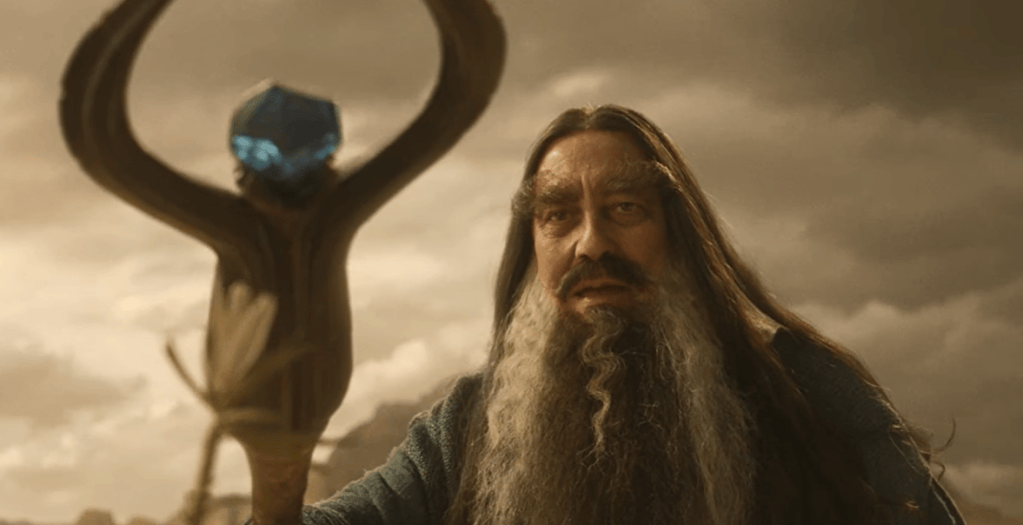
- The Dark Wizard. He’s sure got some eyebrows, wowzers! I mean, I dig it. It feels right for wizards. DK can now compete with both Jackson’s Elrond (whose eyebrows are more intense than large) and Jackson’s Beorn (for sheer size).
- This show has brought in some great actors, but often gives them such strange roles. Ciarán Hinds himself is cool. I liked him in The Terror. Here, he’s a confusing wizard the writers don’t seem to have figured out. He’s a good actor, but he seems like someone reciting lines he’s trusting the writers have made some sense with.
- Also, is it just me, or do the Dark Wizard’s acolytes seem meeker and just generally less powerful here? The three we met in season 1, were they just the elite? They were terrifying.
- I love the landscapes here in Rhûn.
- I like that we get to see Khamûl’s face more (and give the actor a chance to emote!), but the whole confrontation between him and the Dark Wizard is clunky, and their words feel like they’re part of some other IP.
- Khamûl’s all, “I’m in charge now. Kneel.”
- The Dark Wizard’s all, “Lol, no way, you’re crazy. You kneel.”
- Khamûl shows his healed face, while everyone gasps, and he’s like, “I am a Gaudrim no longer.”
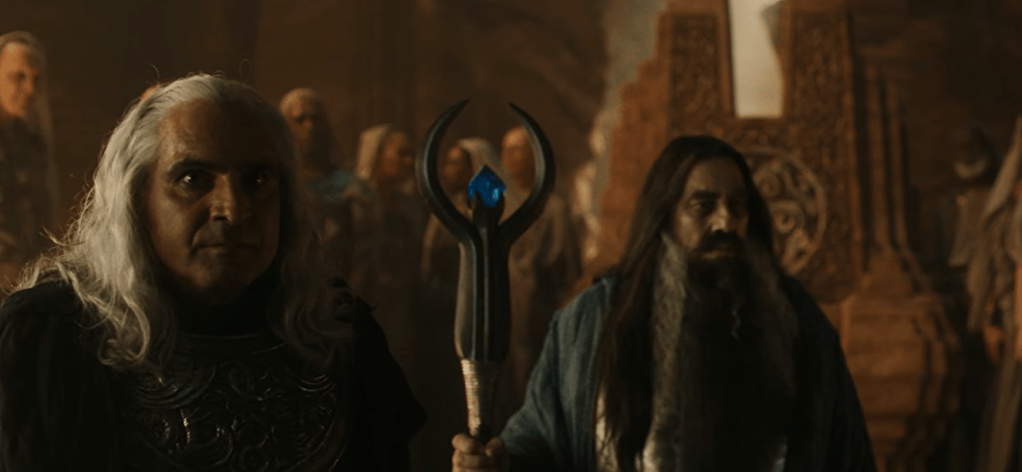
- A minor point, but the word Gaudrim is structured like Sindarin words (Galadrim, Rohirrim, etc.), with the -rim suffix indicating plural, a whole people. So both the Dark Wizard and Khamûl using this word like in the singular (“you, Gaudrim” and “I am a Gaudrim no longer”) is awkward. But it’s not surprising.
- Neither old man budges. K-mûl is proving to be intimidating. When things get ear-splitting and glowy and dramatic, both men calm down again. A stalemate? The cultists are seeing their master humbled.
- Then DK is all, “Jk, we’re cool. Rhûn and Mordor are friends now.”
- Everyone will hail Sauron now. Although, I’m admittedly a little confused. These cultists seem devoted to the Dark Wizard, but we did see those three in season 1 (the Dweller, the Ascetic, and the Nomad) seeking Sauron. Remember, they thought the Stranger might have been him? So maybe DK has, up till now, just pretended to rule these people on behalf of Sauron? It’s unclear to me.
- By the way, we’ve now heard talk of thousands and tens of thousands of Easterlings and riders, but we’ve only seen this one little cult-temple. No cities or communities seen yet to back that up. This Middle-earth often feels like a series of set pieces and a handful of people everywhere we turn. It’s hard to imagine this remote desert temple as the seat of power to any civilization.
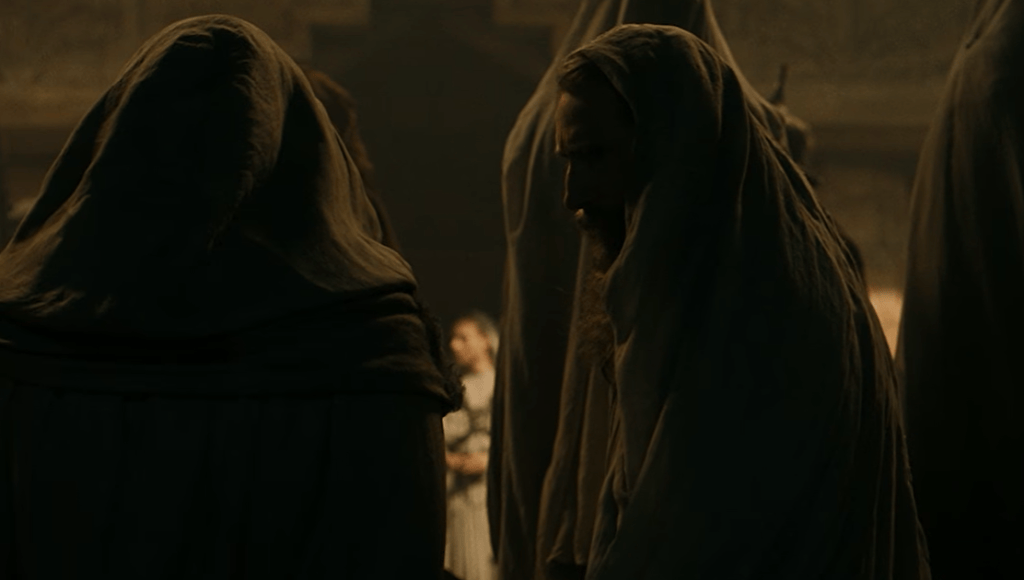
- It’s a little odd seeing Gandalf and Tom Bombadil skulking about in robe-disguises inside an enemy lair (but I’m not opposed to it)—especially Tom! Who do they think they are? Luke and Han? Indiana Jones? Frodo and Sam?
- I didn’t like the Mûmak scene at first, but I do like how it ended. I think it was a little randomly placed, though. Why was no one else around? No keeper for the beast?
- Back to Númenor . . .
- Good to meet Anárion at last. I genuinely didn’t believe the showrunners intended to use him in this story, and just replace him with Eärien. But they seem to have changed their minds, especially now that they aren’t going to try and juggle all three of Elendil’s kids alive at the same time.
- I still like RoP Elendil, and Lloyd Owen, but I’m alsto dissatisfied with his overall story (so far). The show seems to have shifted gears.
- In the books, he is one of the Lords of Andúnië, a royal, an heir of Elros but not the line that ended up with the sceptre (unfairly: justice for Silmariën!). Season 1 of this show made no mention of any of this; he was just some ship captain with no particular lineage. Season 2 started to hint at something more, but only now are they starting to situate him as thoughhe’d been some important noble all along.
- Okay, back to Middle-earth and over to Frodo, Sam, and Gollum. I mean, Marnûkh thread.
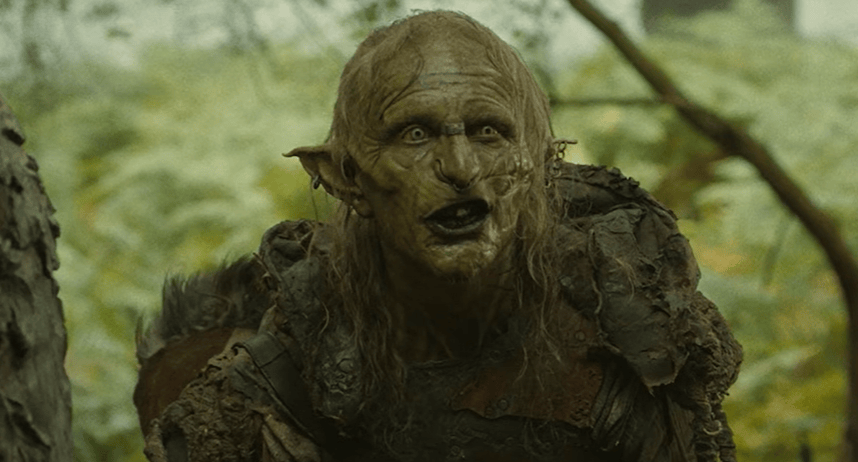
- I would like to reiterate: I like what’s going on with the character of Marnûkh and the whole plot of orcs who (1) aren’t willing to be Sauron’s slaves (carrying on what Adar started) and yet (2) aren’t just all a bunch of nice guys. It’s not that orcs are necessarily as well-rounded as any race (they’re not; they’re still debased and twisted, but they’re still, at the core, creations of Ilúvatar). I dig it all, and generally like all these interactions between Marnûkh and Galadriel and Arondir.
- What I don’t care for is this weak excuse for a side quest to Gundabad. Obviously the real (meta) reason for their going there is going to be revealed in the next episode. The actual hook used for this plot is: There allegedly exists a mysterious Elven-smith from among that group of stiff Elven-smith gofers who we barely saw even lifting a forge-hammer . . .
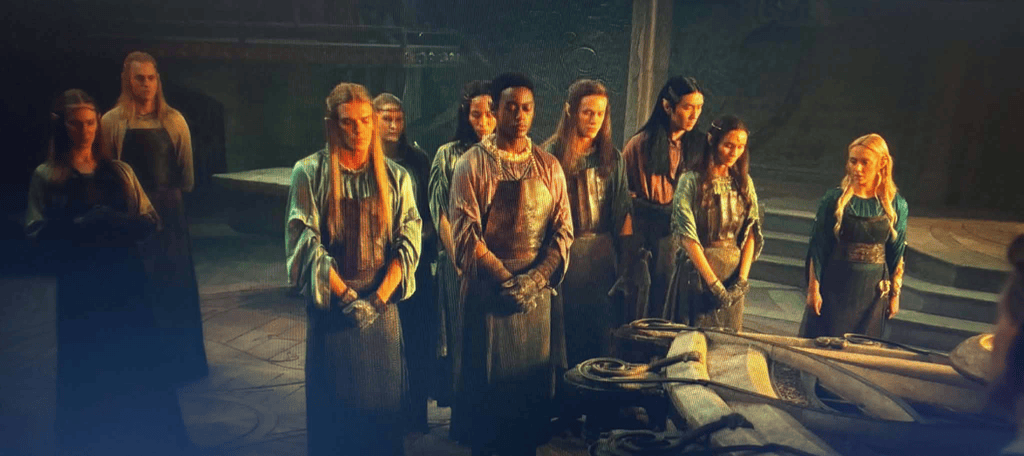
. . . and who somehow has all of Celebrimbor’s ring-making secrets in her head and was then personally brought by Marnûkh to Gundabad after the fall of Eregion? And he brought her there (willingly? in chains?) to be thrown in a dungeon? A few leaps of logic going on there.
- But anyway, I’m generally on board Marnûkh for his own sake. I just wish they’d thought up a better story to work him into.
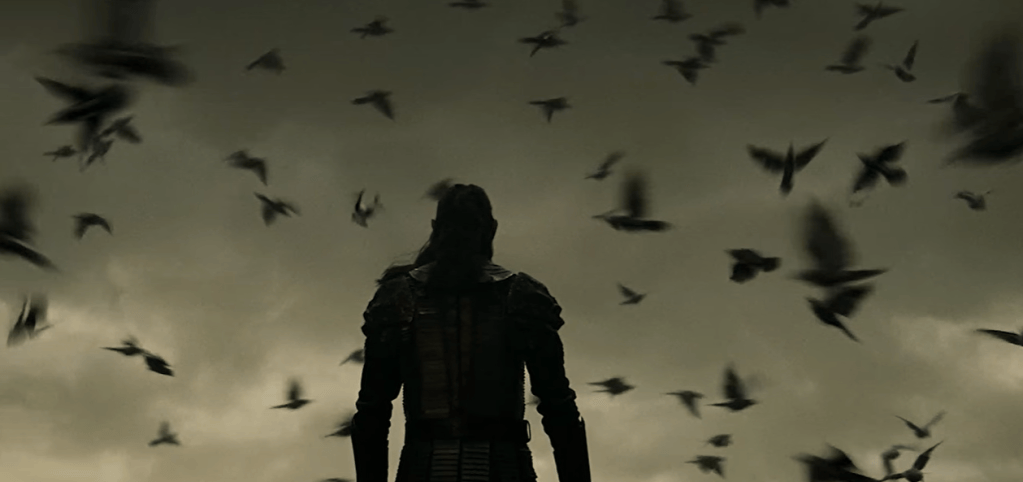
- Oh look, a “crebain from Dunlend” Jackson callback. Not just because it involves black birds, but the way it was shot, and the way the birds all swirl around Sauron as if if they collectively need to report to him just like Saruman’s birds did in Jackson’s The Fellowship.
- Okay, time to jump back to Rhûn. I won’t even bother with Tom. I’ve said enough about him in the last season, where he was a real let-down (again, not the actor, just the writing).
- The fact that Gandalf seems to be hanging on Tom’s every word, waiting for every nugget of wisdom, as though he, Gandalf, is not in fact Olórin who studied under Nienna in Valinor . . . well, no, clearly he is not that person in this version of Arda anyway.
- But what they do next, when Gandalf ventures off along following a gray rabbit (which turns white later as though everything is preordained), this is a bad case of Starkiller Syndrome.
Let me digress to explain. In The Force Awakens (a fun Star Wars romp with some cool stuff in it and also some bad derivative stuff), director J.J. Abrams introduced an “original” new threat. He introduced us and the good guys to Starkiller Base, a military superweapon / battle station created by the Empire First Order that’s a big giant sphere that can—hold onto your hat—shoot a massive laser that can destroy an entire planet in one go.
No, wait, multiple planets at once. Actually, no, it’s not just a big laser: It’s multiple big giant lasers! Scary and dramatically slow-moving and red. And Starkiller Base, unlike the Death Star, doesn’t even need to be right next to the planets it’s destroying. To introduce this fearsome new weapon to the members of the Rebellion Resistance—and, to be very clear, to us, the audience—Commander Poe Dameron calls up a hologram . . .
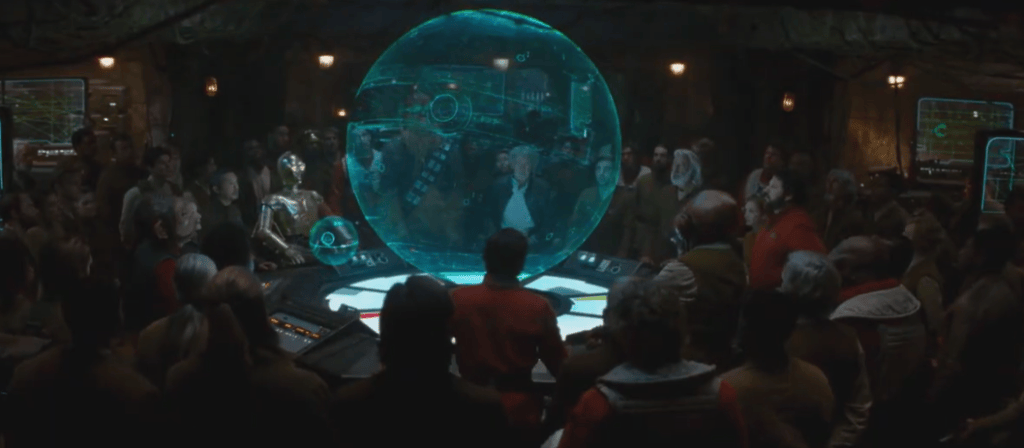
. . . showing us first what the Death Star looked like (with which his subordinates might all be familiar), then pops up a bigger, larger, scarier Death Star–like weapon in the hologram next to so we’re all quite clear on the scale. Starkiller is bigger than the Death Star, you see, by, like, a lot! Everyone got that? Bigger! Contrast and compare, everyone. Get a good look. The new director’s superweapon is a bigger deal, see? The stakes are even higher. He rendered it on the screen bigger, so it’s definitely more powerful. Never mind how something so massive could be thrown together in so short a time.
Oh, so . . . . Hey, remember when Gandalf, in that one popular some movie years back, was standing on that stone bridge in Moria, and he was facing off against that big fire demon thing, and he said, “I am a servant of the secret fire . . . “? Remember how mysterious and cool that wording was?
It was so mysterious and unknowable that Tolkien never explained during the publication of The Lord of the Rings what that meant. And even after his death, when Christopher Tolkien gave us The Silmarillion in 1977, the “secret fire” finally got some kind of association but it was never explicitly spelled out how it worked with Gandalf. Even Gandalf’s role as Sauron’s enemy, and his chief purpose for coming to Middle-earth in the year 1000 of the Third Age (per Appendix E), was somewhat vague and under-wraps, and so Gandalf himself remained enigmatic until the end of the book. Only then did it become a bit clearer that his whole mission had truly been to oppose Sauron, and that he was sent to Middle-earth to do just that.
But even then, he’s a mystery box that never needed opening. If you chose to read Unfinished Tales and the chapter “The Istari,” then you could get a better picture of who Gandalf really was in the grand scheme of things. The limitations of his role on Middle-earth are spelled out, and even his precise mission was given some slack. The mission of alI the Istari was to “”to advise and persuade Men and Elves to good, and to seek to unite in love and understanding all those whom Sauron, should he come again, would endeavor to dominate and corrupt.”
Well . . . you ain’t see nothing yet. The showrunners of The Rings of Power have one-upped both Jackson and Tolkien. Forget all that mystery box stuff at last. They’re gonna spell it out for you, and do it right when it’s most convenient to the plot in the third season of a five-season series—for some reason right when Galadriel, an elf warrior, and an orc are traveling to Gundabad, and Sauron, too, will be headed that way. That’s the moment in the grand expanse of the history of Middle-earth for this momentous mandate. Why tell Gandalf any of this right after he crash-landed by meteor? Not as much fun?
- So, just about five years after Gandalf remembers, more or less, who he is, and after meeting Tom Bombadil, Eru Ilúvatar, the one true god of Tolkien’s legendarium, makes direct verbal contact with Gandalf.
- Burning bush–style, too!
- Ilúvatar, who even in the books never does this except to the Valar themselves, and only rare, explicitly tells
usGandalf whatwehe needs to know.
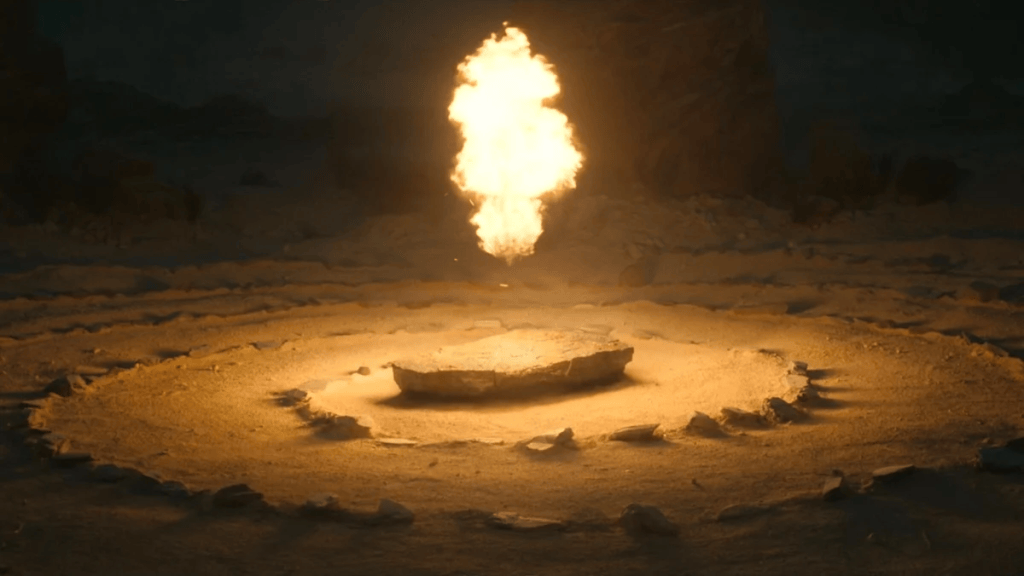
- Gandalf immediately IDs the remarkable flame that erupts in front of him (which, don’t get me wrong, does look cool): “The Secret Fire,” he pegs it.
“You know me not. I am that which burns within all things. Yet still remains unseen. I built the heavens and stars, and all of Middle-earth is cradled within my flame.”
“I see now,” Gandalf replies, setting aside The Silmarillion almost entirely, because in that book, all the Ainur (including the one who will one day be called Gandalf) absolutely do “know” Ilúvatar. They were all there when he thought them up and guided them into singing the details of the universe to come.
“You are endless. How am I to serve you?” Gandalf asks. To which the Secret Flame just jumps right into the mini info dump:
“There were five servants sent to save Middle-earth. You are but one.”
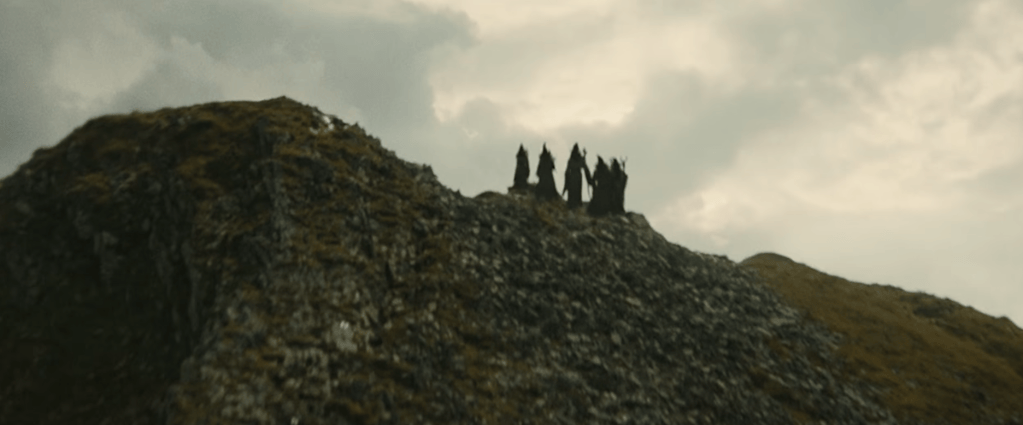
“Another of our order has fallen into shadow,” Gandalf states, following along, “the Dark Wizard.” Then the Secret Fire name-drops a Quenya name for one of the Blue Wizards.
“He was once called Pallando. One of two wizards sent to protect these lands, but he wanted more. So, he betrayed and murdered his partner. An act so evil that it laid all of Rhûn to waist. “
Since in this version Gandalf was apparently not one of the five Istari (wizards) sent together (the white, the brown, the two blues, and the grey), he just works with what he’s been given.
“How am I to defeat him?” he asks the Flame.
“You were not sent to Middle-earth to defeat him . . . You were sent to save him. Only together can you prevent the armies of Rhûn from joining Sauron. Only together can you save Middle-earth. Arise now, Gandalf, Servant of the Secret Fire.”
Each statement bears some vague resemblance to something from Tolkien, yes, but each statement still feels off. Left of center (off of the strip, in the outskirts, and in the fringes). Taken altogether, it all just becomes another massive retroactive change to the story of Gandalf. (Say, whatever happened to the real RoP origin of his name, “Grand-elf”? Conveniently dropped?) This stuff continues to muddy the waters of what the show-watching audience thinks about Tolkien’s world, and that’s why it irritates me.
Essentially God—here calling himself the Secret Fire (rather than the power he holds as specified in The Silmarillion)—is essentially coming down to give our protagonist direct verbal instructions. He’s like a Dungeon Master throwing up his hands in frustration and just having the deity (who one of the Player Characters is supposed to revere) come down from the heavens in person to tell a procrastinating character exactly what he’s supposed to be doing because the character has been wandering around missing all the DM’s obscure plot hooks thus far.
At this rate, if we do see the Dark Tower, Barad-dûr, actually “completed,” I bet it’ll be visually taller than Peter Jackson’s, for all the same reasons.
I won’t bother to break down all the problems with the Secret Fire’s speech. I’m not trying to be snooty and I don’t mean to gatekeep. I want more readers to enter the fold, for sure. And if this is the way they’re doing it, well, okay then. I hope they realize how much deeper the story really is when they find the books.
- Moving on.
- Marnûkh sure is handling bright daylight with complaint, isn’t he? He really is an exceptional member of his kind. Not a bit of burning flesh.
- I kind of like his attempt at poetry, even if the timing is a bit contrived. I get what they’re doing, and I think there’s a place for it. It doesn’t even need to go far.
- Whoa, a chimey Ring-alert! Suddenly, Galadriel, Arondir, and Marnûkh need to hide!
- The power levels of these Nazgnagôl are an uncertain thing. Especially if they’re Ring-servants before there even exists a Ruling Ring through which they are enslaved. Well, the evil power comes directly from Sauron, right, so same difference, right? But no. By having no One Ring to Bind Them, aren’t we just cutting out the middle man? But then that just begs the question: Why make a Ruling Ring at all if he can control the Rings through himself? Clearly he needed the Ring to do this. The Nine and Seven might be corrupted by his touch, but he cannot master anyone through them without the existence of the One.
- Which is why, in the text, the sixteen Rings of Power were not handed out to anywhere until he had the One. But how inconvenient to talk like that in this show.
- Oh, look, it’s another Jackson callba— Wait, no. Not so much. Really, it’s a callback to Ralph Bakshi by way of Jackson.
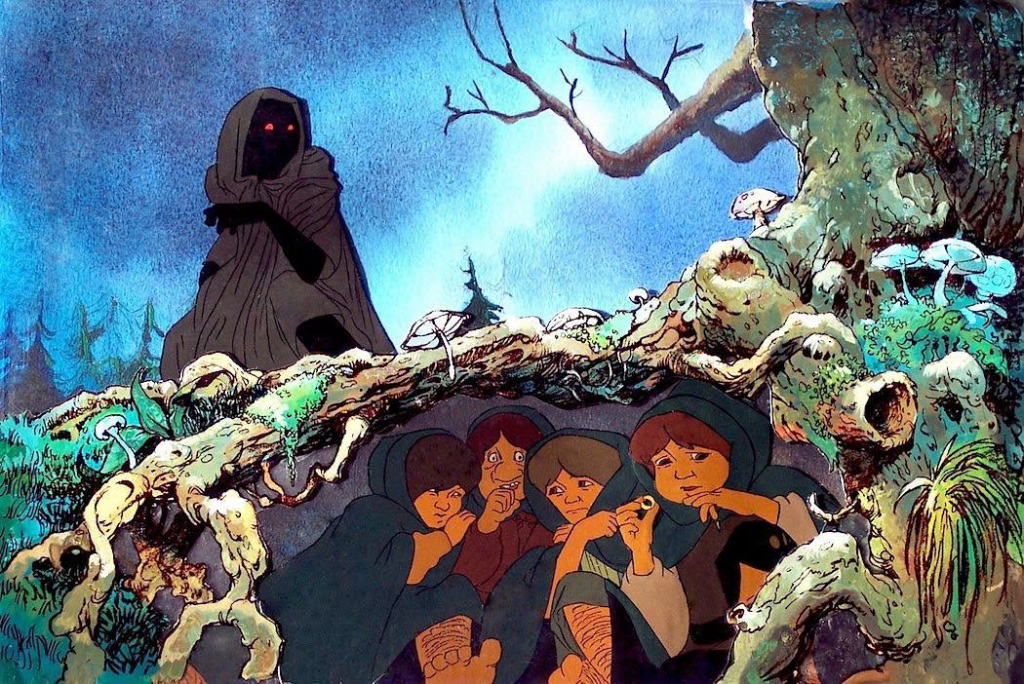
- Right up to Galadriel peering up through an opening to glimpse the black-garbed figure hunting them and closeups of the hooves. That’s Jackson-specific.
- Why do the Nazgnagôl stop where they do? Can they smell one of the Three through their wearing one of the Nine? Seriously, it’s an odd choice to create a status quo unchanged by the existence or non-existence of the One Ring. Why is the One even needed?
- The Nazgnagôl helmet design sure is cool. Why couldn’t all the good artisans and creators working on this show stage a revolt and take over the story?
- Butterfly distraction! At least they didn’t summon larger winged friends.
- The Marnûkh campfire scene reminds us that Marnûkh is not a nice orc or anything. He’s willing to poke the bear. But it turns out to be the show’s version of “Go home, Sam!” and it really does send Arondir packing—so that he can later have his “Let him go, you filth” moment later. Bummer.
- Let’s go back to Númenor and meet Kemen again.
- Elendil is captured. A shame it was that easy.
- The news of his daughter’s apparent death hits Elendil hard, but maybe not hard enough? He’ll bounce back surprisingly well in the next scene with him.
- And back to Mordor we go!
- I’m just not a fan of the Elves in this show. They never feel like Elves, except when Arondir is on screen, and sometimes Galadriel. This couple isn’t convincing.
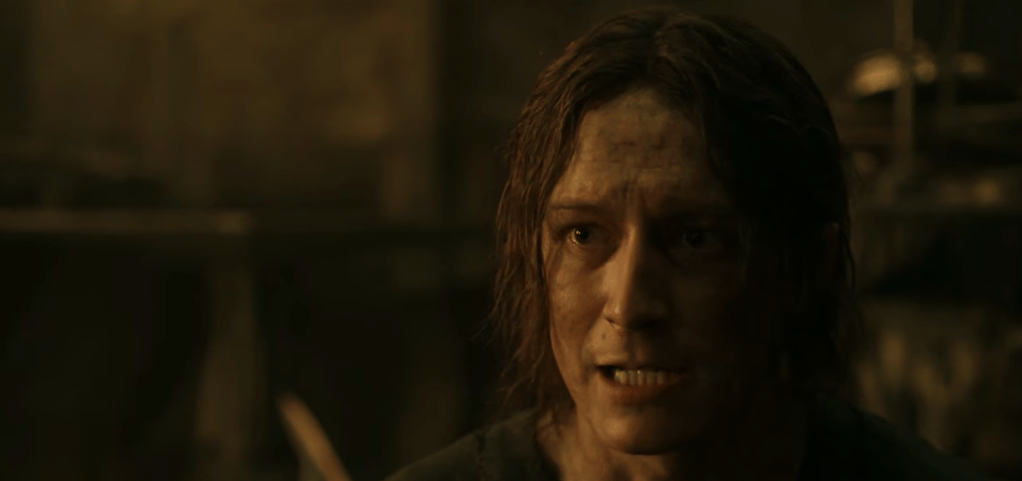
- What a jerk Sauron is. And how awkward some of this dialogue is. But Charlie Vickers still handles it as well as can be expected.
- “We must reach her before the Elves do.” Is he just talking to his soundboard orcs again? Who is “we” in such words?
- Barad-dûr sure does look intimidating. I’ve got no problems with its design, though I do wish we had some kind of explanation for how and when it as made. Only in five years? In the books, it’s about 600 years between when Sauron gets it started and when he finishes construction (with the Ring’s help, no less). Here we’ve got a pretty big fortress in record time.
- Sauron calls for his ride.
- Waaaaay up north, faaaaar from Mordor, at Gundabad . . . where Marnûkh allegedly placed his MacGuffin Elven-smith “right under [Sauron’s] nose” (as he said in the last episode), the orc says he’s got to place Galadriel in shackles. There’s no other way to bring her in. He’ll have to bring her in as his “prisoner”—sort of like a cuffed Wookie in the Death Star, to make an obscure reference.
- Gundabad, for all the wonky contorting this show is doing to bring us to different places like this, sure looks badass. Why can’t we just get a series of small “short stories” set in the Rings of Power universe to explore, and not mess with the larger goings-on?
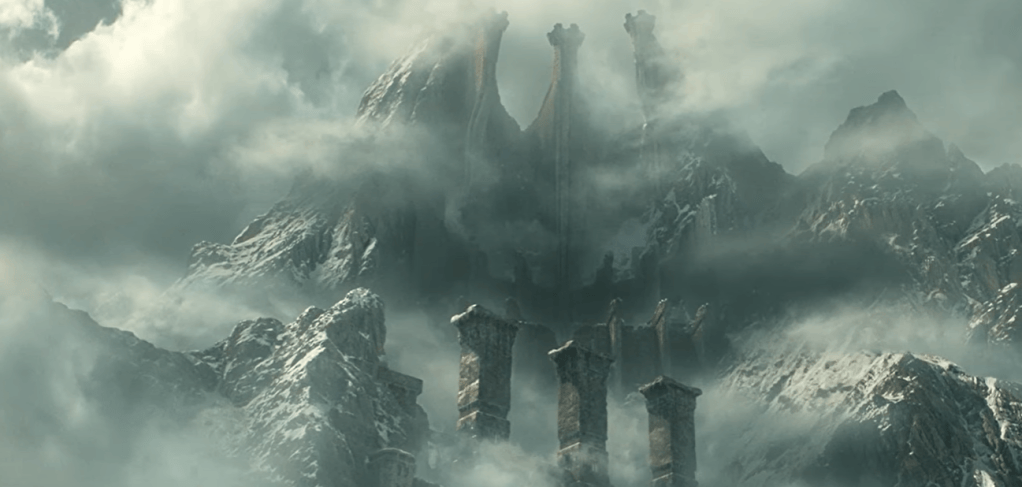
- Right under Sauron’s nose!
- Sauron’s nose. Heheheheh.


4 responses to “RoP : S3 Ep 3: The Secret Fire”
I want to dislike the show more, but I am still hooked. Seems like every episode is setting up the next time they back the bus over Lady Galadriel though.
The biggest disconnect for me is trying to reconcile who these characters are in RoP vs who they are depicted as later, even if you are only taking Jackson’s LOTR into the mix and throwing out book lore entirely (which RoP has definitely done in more than a few places).
LikeLike
Right. This show keeps trying to reference both LotR the book (and doing that poorly) and the Jackson films, which is awkward. But it’s also not good at staying consistent with itself.
LikeLike
I’ve chafed at most episodes of this show. Many I have actively disliked. But this is the first one which seemed to genuinely insult my intelligence.
I counted no less than five “call-backs”, “shout-outs,” “tributes,” or “shameless rip-offs” this episode, four of which were intentional. We have two for Fellowship of the Ring, the hiding from the Black Rider scene and the Saruman debriefs the crows scene. We have one for Return of the King, with the Go Home Sam scene (more on that later). We have one to The Prince of Egypt (I would say Exodus in general, but finding the Burning
BushRock by tracking a wayward animal comes from the movie), and its so explicit I half expected the Flame to say “Gandalf, take off your sandals for you are standing on holy ground.” I’m not bothered by the muddled theology as if anything it makes Eru even more Trinitarian than He is in The Silmarillion. But the exposition was a bit much. Also, Jeff, why do you say that this version of Gandalf is not one of the five servants? Eru tells him “you are but one,” “but” in this context being an archaic form of “just,” so “There were five servants sent to save Middle-earth; you are just one.”Anyway, the unintentional fifth reference was courtesy of Pallando wanting to use a magic ring to heal the land of Rhun and make it green again. This is the plot of The Lord of the Beans (2005), Veggietales’ turn at parodying LOTR. The Land of Woe is nearly identical to Rhun in appearance.
I am confident the show has the rights to the name Andunie, so captioning it “Western Numenor – Haven of the Faithful” can only be because they don’t trust their viewers to follow unfamiliar placenames. Anarion has promise, I hope he’s not wasted. I also hope we see more of Elendil going forward, as he’s easily the best part of the Numenor plot.
One thing this episode actually fixed was the “under Sauron’s nose” line with the establishment of an ongoing siege of an elven city in the Coldfells near Gundabad. Saying something nearby is “right under Sauron’s nose” is the same energy as saying something in Nazi-occupied France is “right under Hitler’s nose.” However, any good will built by this fix was promptly destroyed when the show asked me to believe a crow flew from the Coldfells to Mordor in a single day.
“Go Home, Sam” worked (putting the books aside) because we over three movies became invested in Frodo and Sam’s relationship. Ditching Sam for Gollum therefore felt appropriately devastating. Gollum then betrays Frodo, and in his lowest moment is rescued by Sam in an excellently staged moment of eucatastrophe. This episode’s version does none of this. We as an audience are not nearly invested enough in Galadriel and Arondir’s relationship to care when Galadriel sends Arondir away. And then the episode tries to trick us, by cutting away to several different plotlines before we return to this one. But if you’re paying attention it doesn’t work. Specifically, Arondir returns to Galadriel the very next time we see her. If you remove the other plots and just watch this single plotline consecutively, Arondir leaves, sees the siege, and returns without anything happening with Galadriel and Marnukh. The show tries to hide this by interjecting quite a bit of other plotlines in the middle, but it’s just misdirection. Arondir’s return doesn’t do anything, either, because not having seen Galadriel struggle without him we have no reason to be relieved when he returns. This whole beat is an exercise in pointlessness.
I wish they would start making better episodes so I can write shorter comments.
LikeLike
Hah! Prince of Egypt. Yes, I see it. I hadn’t realized following an animal to discover God talking through fire was a Prince-specific set-up. But I sure do remember it.
As for why I think/though Gandalf was being excluded from the five, I had to go back. I think I was tripped up in the visual representations. I realize now that the images we’re show were symbolic only—we see five wizards up on that cliff-top, and we know Gandalf was never hanging out with four other dudes at the same time. I took it literally: five guys showing up and traveling together, and obviously Gandalf wasn’t one of that group.
But I realize now it’s figurative imagery. Because then we see the two Blue walking together, and when one murders is described as murdering the other, he just vanishes; obviously that’s not literally how that happened.
Which makes me realize the show does do this sometimes, and it’s annoying, because what you can you trust, then? For example, giant Sauron in armor from the first season’s prologue; more and more evidence points to that never being an actual moment in time, but just people’s imaginations about him (Galadriel’s in particular, given it’s her prologue).
You make a good point about Gundabad. I guess so. More figurativeness. I think I’m thrown by the fact that there’s allegedly this massive, map-spanning war going on where Sauron is said to have conquered all these lands (the dark spots on the prologue map) but then we see him back at home in his workshop barely minding anything about it. We don’t see him talking to anyone about the war, and for five years he’s evidently been far away from it personally? Where he’s a month’s journey from a place like Gundabad. We know from Unfinished Tales that there are times where Sauron is out there in Eriador personally involved in this armies’ attacks. So . . . it just feels very disconnected. I could imagine a region like Calenardhon being considered under his nose . . .
LikeLike