The first half of season 3 has dropped all at once. Four episodes. Which is absurd, but must be good only for someone‘s numbers to line up in the most favorable way. In any case, when all’s said and done, the method of release isn’t very important. What is, is this story itself. I’ll try to keep this as short and sweet as I can, building on previous commentary.
Spoilers approach, be warned.
First, a reminder of all my previous reviews of past episodes (and other bits and bobs): Concerning The Rings of Power.
Now, to quote both Saruman and now Sauron (or, I guess, is Saruman now just quoting Sauron, just like Galadriel’s “foundations of the earth” verbiage to Frodo is quoting Sauron): “We have work to do. . . .”
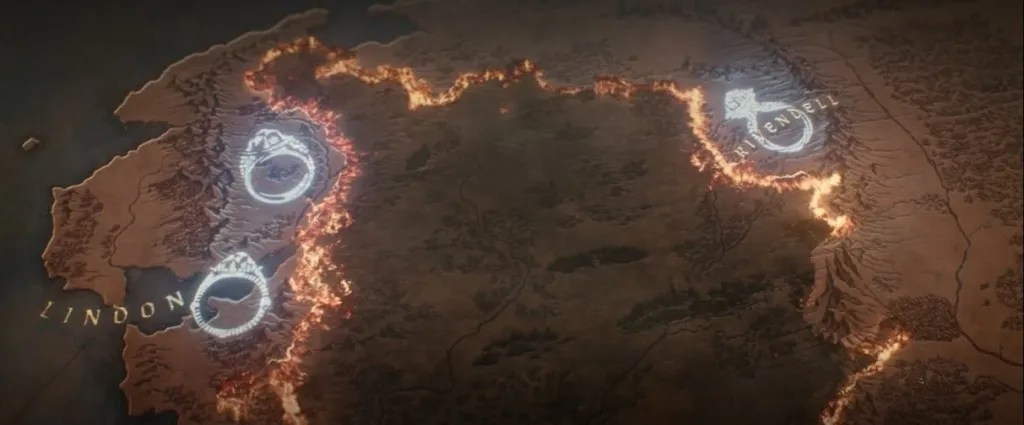
- Unfortunately, things are starting off a bit weak. This is the least interesting of the season prologues/intros, but maybe it’s the least lore-breaking? But I have to say: Way too much has been made of the 5-year jump in time. This is a show that compressed millennia into a handful of years; five years is not impressive.
- Of course, this prologue presents another immediate departure from the book version of the Rings of Power storyline. But I know I just have to accept this.
- To make a tree analogy: If the book version of Tolkien’s Second Age was a root system that Amazon was going to emulate, but they remove and replace some of the primary and secondary roots, then all the tertiary roots that grow further down the system are going to be wildly different. No way around it.
- For example, per Tolkien’s writings, the Three Rings are able to slow the effects of time, to preserve the beauty of the land, and essentially augment the native abilities of the Elves who wore them. They don’t generate military force fields of defense. (Which, you see, was a separate thing altogether; see the Girdle of Melian.) Sure, Elrond in Rivendell and Galadriel in Lothlórien can better protect their refuges in this way, but that’s all. But even those uses of their Rings came much later, after Sauron is separated from his Ruling Ring.
- That the Three are being used at all before the One is made certainly has me paying close attention. Because the moment the One Ring does appear, those Three had better stop being worn at all, or else they’re truly going off the rails on an already crazy trail.
- Anyway, let’s jump right in to Sauron’s workshop!
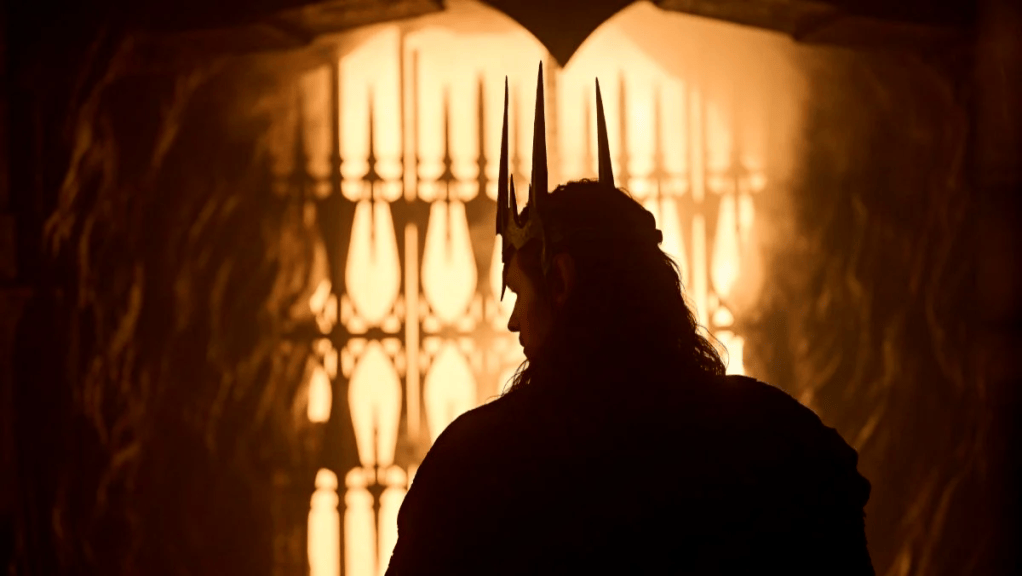
- Is Sauron’s workshop and throne room the same room? I can’t quite tell yet. It appears to be located inside Barad-dûr, which itself is not yet fully operational.
- I do want to know why Sauron is there in Mordor. I mean, it makes sense to us, as fans of The Lord of the Rings. But the show itself hasn’t explored or explained why, and it absolutely could have. Remember when the eruption of the mountain was the conclusion to a Rube Goldberg machine in season 1, involving a sword (whose? Morgoth’s? Sauron’s?) a lot of water, and the digging of tunnels in a very precise way? Whose idea was all that? Is Sauron now just moving in because someone else conveniently put it together? We’ve had no indication whether that was his plan or if he’s just benefiting from someone else doing it? In season 1, it was Adar who enacted the actual plan.
- The books have their own reasons for all this, but we’re not hearing any of that here.
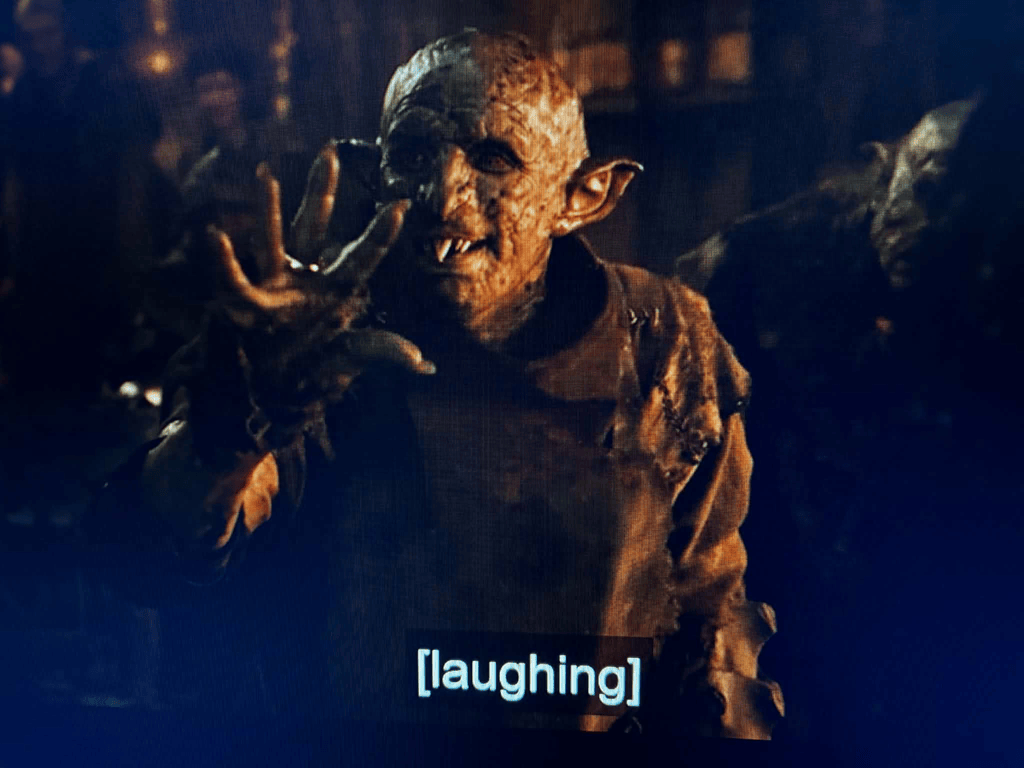
- The fact that Sauron is using basic orc henchmen as his workshop grunts and throne room attendants is disappointing. They’re fodder to him still, and that feels right, but it’s disappointing that he’s using them as sounding boards, as listeners to monologue to . . . well, that feels like a far cry from the Dark Lord of The Lord of the Rings.
- He should be terrifying, and he’s just kind of a human bully here. A petty warlord. That he’s got the ears and hair of an Elf and the stubble of a Man and he’s not taking on a more monstrous and scary form in his own court is a missed opportunity. No wonder some orcs will go rogue.
- Previous episodes of this show have already shown that the sword-drawing-from-a-metal-scabbard sound—the schwiiiinnng sound—appears often in this Middle-earth. But it’s never been more out of place and laugh-out-loud ridiculous as this moment when an orc hands Sauron a pair of [salad] tongs:
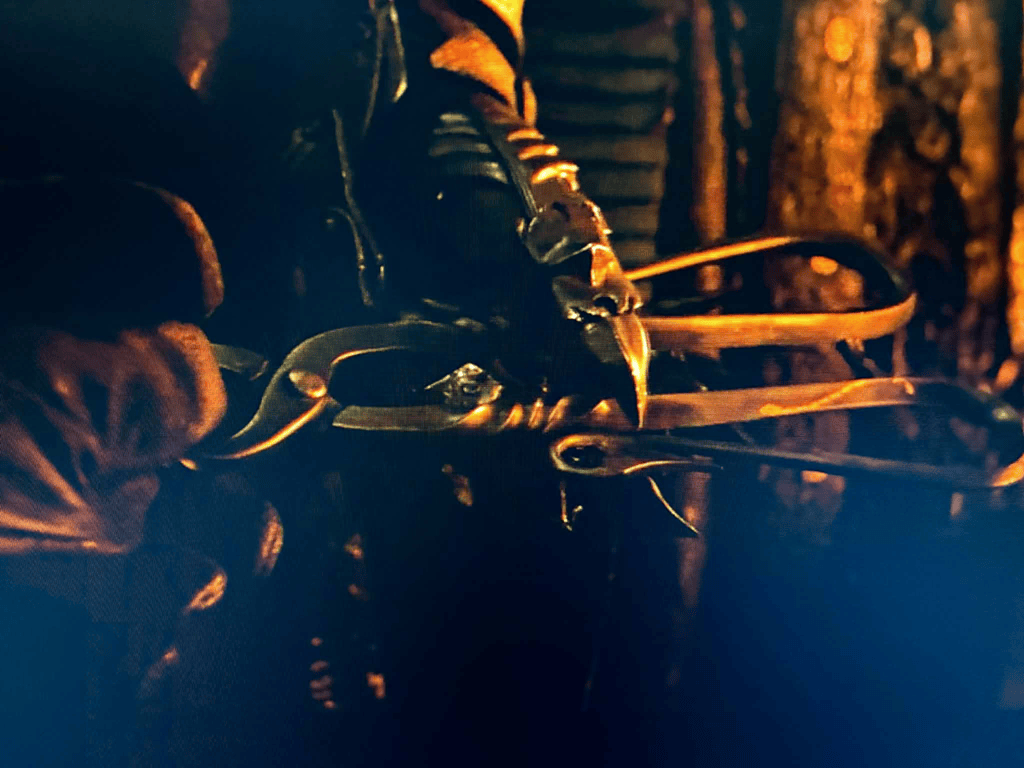
- Look, if the orc had been shown drawing the tongs out of a metal sheath, maybe you could justify that over-the-top sound effect . . . but this was just an orc handing it over to his master. Good Lord. You could give us the clanking/clicking sound of the metal gauntlet gripping it, if you want—that could work! But this is a full-on sword-from-sheathe sound. Go back and listen.
- Speaking of the gauntlets, that’s not ideal ring-making equipment or ring-holding garb. And, no, Peter Jackson doesn’t get a pass on this, either. Sauron holding up the One Ring he just made, holding it up exalted while in full battle armor, was a bit silly, too. Am I the only one who thinks Sauron would make more Tolkien sense as a tyrannous half-spirit/half-flesh shapeshifting being inside his own fortresses?
- Look, this orc finds it incredulous, too.
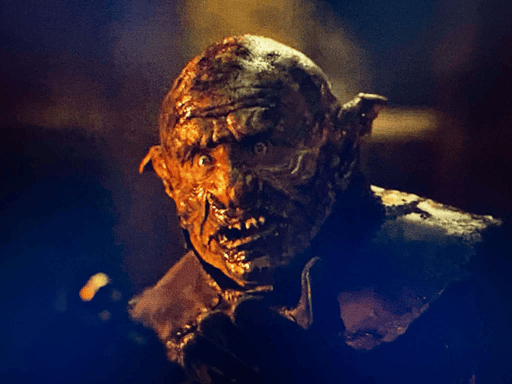
- The scene where Sauron tests his latest ring on an orc finger is comical, but I can’t help but wonder: should it be? I’m thinking of Adar and his arc. Also, wouldn’t some of these workshop orcs be inching toward the door? It doesn’t seem to pay to stand so close to their long-winded boss.
♫ Don’t stand so . . . Don’t stand so . . . Don’t stand so close to me . . .
- I also keep thinking back to the very cool Season 1 Episode 1 post-prologue scene where Galadriel and her team are exploring an abandoned fortress of Sauron’s, and orcs are “frozen” or merged into the walls. Where is that coolness? When were those experiments supposed to have happened? Those were attributed to Sauron’s experiments “not of flesh, but over flesh,” aren’t they? They were freaky. Why does present-day Sauron seems less capable?
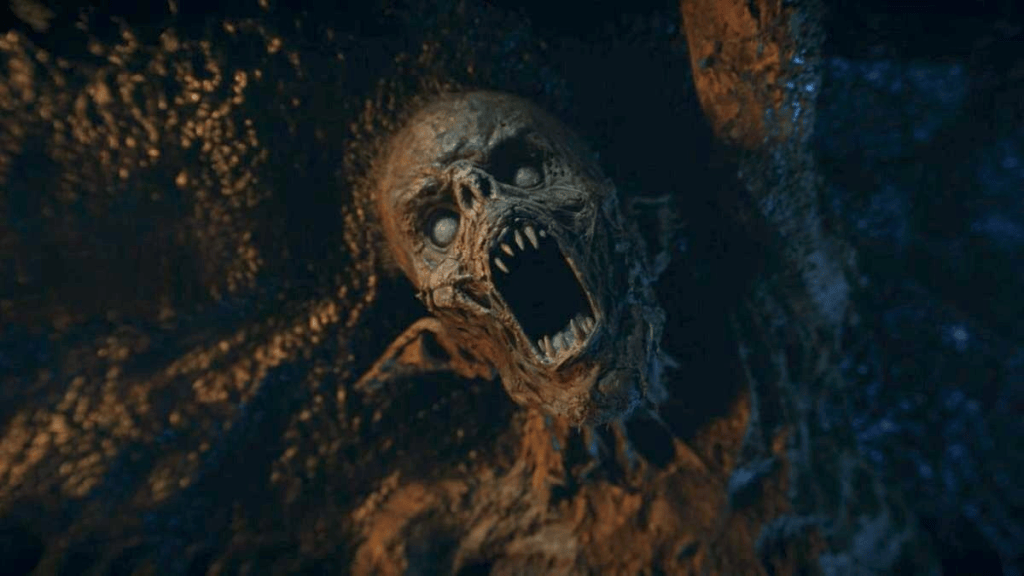
- That stuff doesn’t even feel like it’s part of the same show anymore. Remember this?
- Anyway, Sauron scolds his orcs, and commands them rather vaguely: “I want the Elven Rings! Even one will suffice. Expand the search. Any Elf who ever met Celebrimbor is to be interrogated. Every record of his methods studied.”
- First . . . interrogated by who? The orcs who find an Elf who ever met Celebrimbor?
- Second . . . who exactly is meant to be studying Celebrimbor’s records?
- Am I the only schmuck asking questions like this to the ether?
- Also, I guess we have to assume that these orcs (of dubious education) all know who Celebrimbor even is? Do all orcs? Are these workshop orcs in particular part of the upper echelon of orc society, and would know what a powerful and intelligent being like Sauron is saying with every word? Did they all watch the last season and know what’s going on precisely? And if not, is Sauron being an idiot about this?
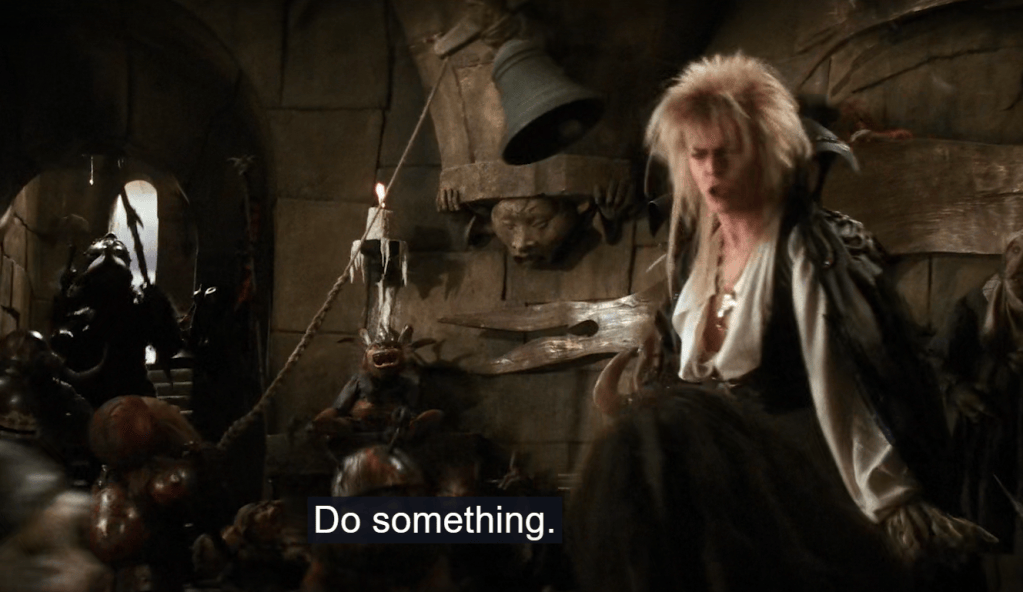
- Look, it’s not quite as bad—but it’s getting close—as that moment in Labyrinth (which is otherwise a wonderful film) where Jareth also gives a bone-headed and vague command to the subjects of his goblin court when he panics . . .
- I do like Marnûkh. He dares to give Sauron a little lip. Got no problem with him, only Sauron, whose skills in handling his own servants seems a far cry from his literary counterpart.
- The idea that Sauron needs Celebrimbor’s secrets to figure out how to make a Ring of his own . . . well, it all goes back to the changing of the book plot and the proper sequence of events: [In the book, Sauron goes to Eregion and teaches the Elves how to make Rings with his recipe of evil baked in. Elves make 16 Rings with his oversight (then Celebrimbor makes 3 secretly without). Sauron makes the One, as he’d intended all along and already know how to.]
- In fairness again, The Rings of Power isn’t the only adaptation who deviates on this point. Even in the Ralph Bakshi animated movie, Sauron “learned the craft of ringmaking” from the great Elven-smiths. Basically, no one does it the Tolkien way.
- But . . . I suppose this does eat up a lot of plot-time, to pad out the story, setting Sauron back to square one. It gives Sauron something to do.
- They do hammer home multiple times in this episode the idea that Sauron had no hand in the making of the Three. But honestly, I think that’s a retcon they’re just doubling down on. Yes, in the book that’s 100% true. But in this show? The dude was there in the room, helped give them the idea of rings, prepped the forge chamber, and who knows what else? Most ring-creation in this series about ring creation is done off camera. Halbrand could have been doing more still. This was literally him helping out, remember?
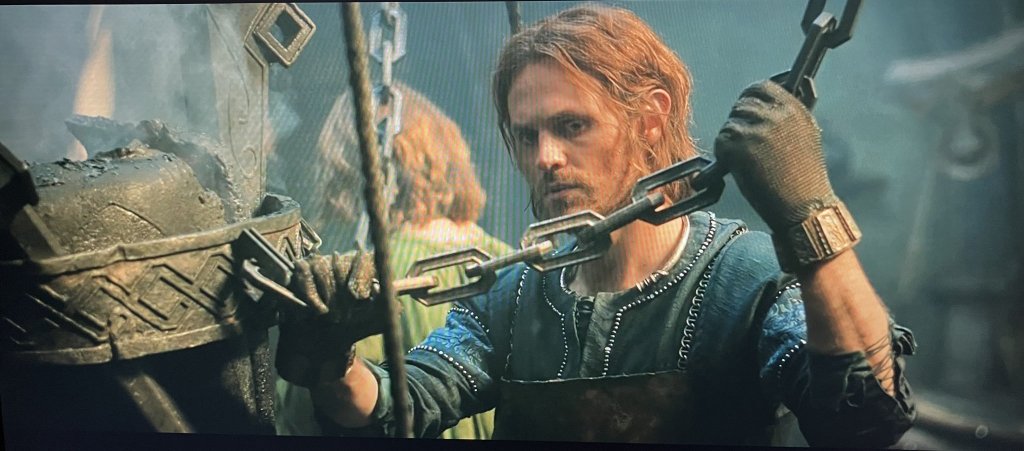
Okay, flackback time.
- To the First Age, the title card tells us. I do wonder where this is, but I assume the show simply doesn’t want to decide on that point. Sticking to the information provided in the data provided by the show (and therefore not porting in my knowledge as a Tolkien reader), this has to be somewhere on this map:
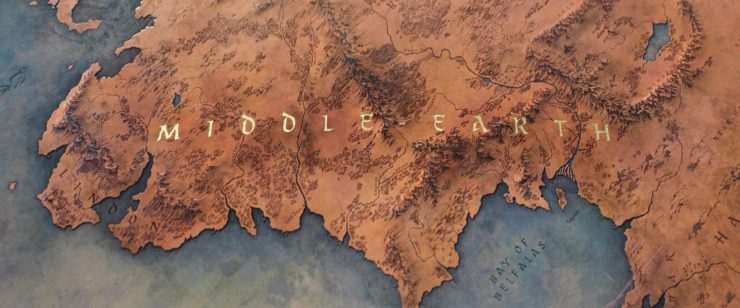
- To be clear, this cannot be Beleriand where we finally meet Celeborn and discover how he meets Galadriel. Beleriand is a First Age location as described in Tolkien’s books, and it doesn’t exist in the Second Age. (The Beleriand mentioned by Arondir in the show, just that once, was only called “a realm” and seems to have no place on any map.) To reiterate from previous posts, right from the get-go, The Rings of Power depicted the Elves of Valinor sailing over to the sea right to this very map, where they warred with Morgoth’s armies.
- So this is Eriador or somewhere else east of Eriador. (Not the forest realm of Doriath, where in the books Galadriel meets Celebrimbor in most versions of her tale):
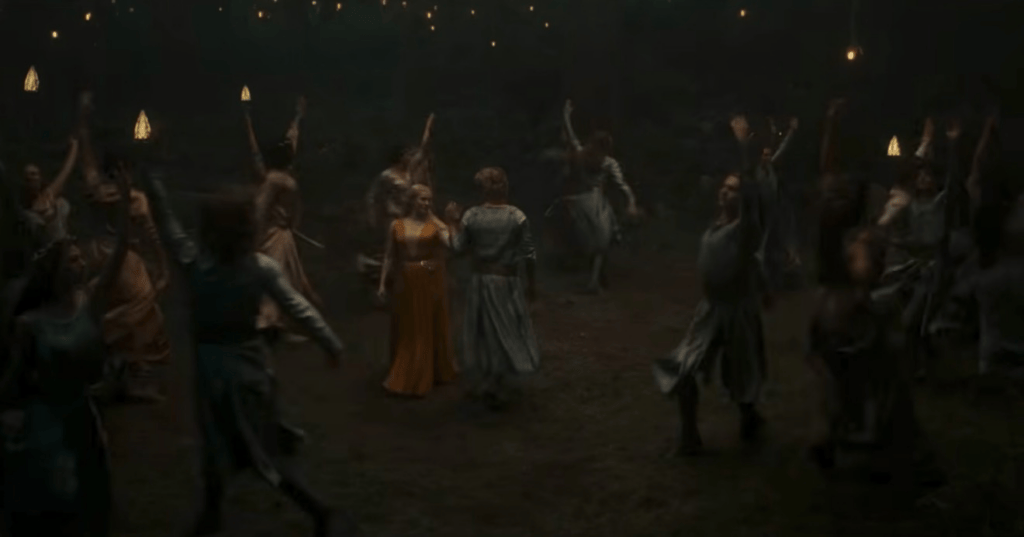
- I like Celeborn well enough so far. It’s good to see the guy as a warrior. I’m trying not to make too much of his spot Galadriel “dancing” in the woods by herself—because that’s a motif fitting for the more famous love stories (Aragorn/Arwen, Beren/Lúthien, mostly), and here it’s just a weak callback.
- But it’s fine. I like seeing Elves dance. I’d be curious to know where in the timeline of war this battle-and-dance this is meant to take place. Before Galadriel’s brother’s death? After? I am constantly reminded at how much we see her gunning for Sauron on her brother’s behalf, and not Celeborn’s.
- What I’m not crazy about is the means by which this very important and necessary book character, Celeborn, is just getting popped back into the story he shouldn’t have been absent from in the first place. It’s 100% a soap opera / telenovela trope: the long-lost lover. I’m surprised he’s not coming out of a coma and wearing an eyepatch. Then again, we haven’t learned the means of his imprisonment yet.
- I’m not sure how to feel about the scene with younger Galadriel and Celeborn daydreaming about what is obviously going to be Lothlórien (as if it’s an uninhabited land at this point?). They’re property scouting long before the Second Age even begins, eh?
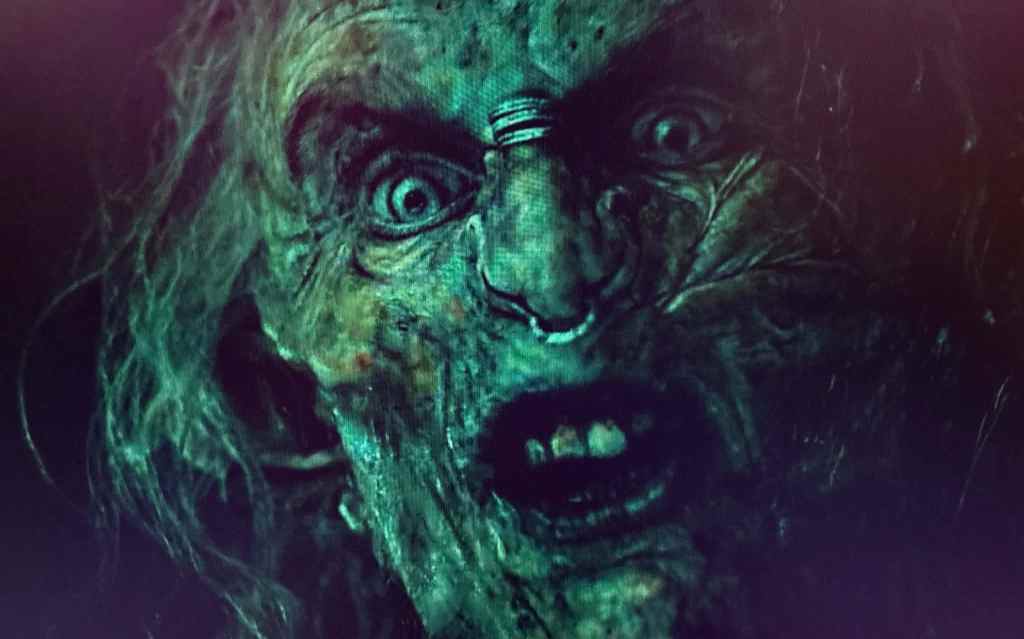
- Now let’s talk about this guy, the Nazgnagôl.
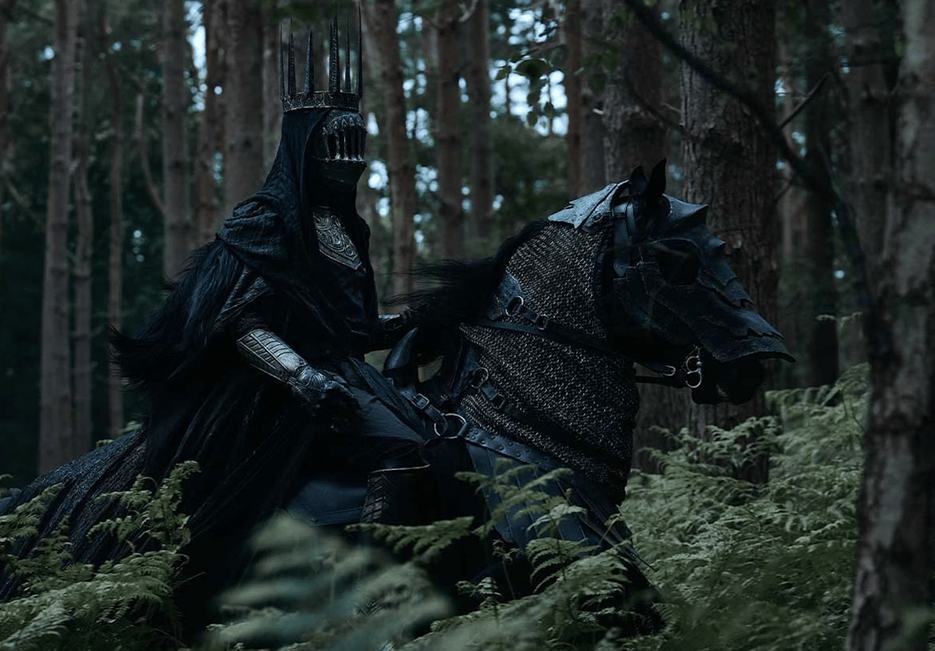
- Too soon to judge fully, but I have a mild issue with how powerful this one lone mortal (with a ring, sure) seems to be, and how easily he outclasses Galadriel, despite her age, skill, and possession of one of the Three. This guy is arguably the weakest he’ll ever be. I mean, there isn’t even a One Ring that he’s enslaved to yet. He’s just a cultist-warrior for the guy who did help make the ring he’s wearing.
- Galadriel’s own personal power scale seems to grow and shrink based on the needs of the plot. It’s so . . . human being this inconsonant. I think Elves should come across as far more consistent than this, on all fronts. They don’t change year to year. I think Morfydd Clark is a good actress, but Arondir has been the most consistently Elf-like than anyone in this show.
- I am intrigued, and not necessarily bothered, that this Nazgnagôl is of the Lossoth! One of the Snowmen of Forochel. I would sure like to know more of his story—like how did he get recruited from so far away in less than five years and be at home riding in such woods when he’s accustomed to the frozen wastes of the far north?—but I don’t think we’re going to get that. Name-drop and move on is par for the course in this show.
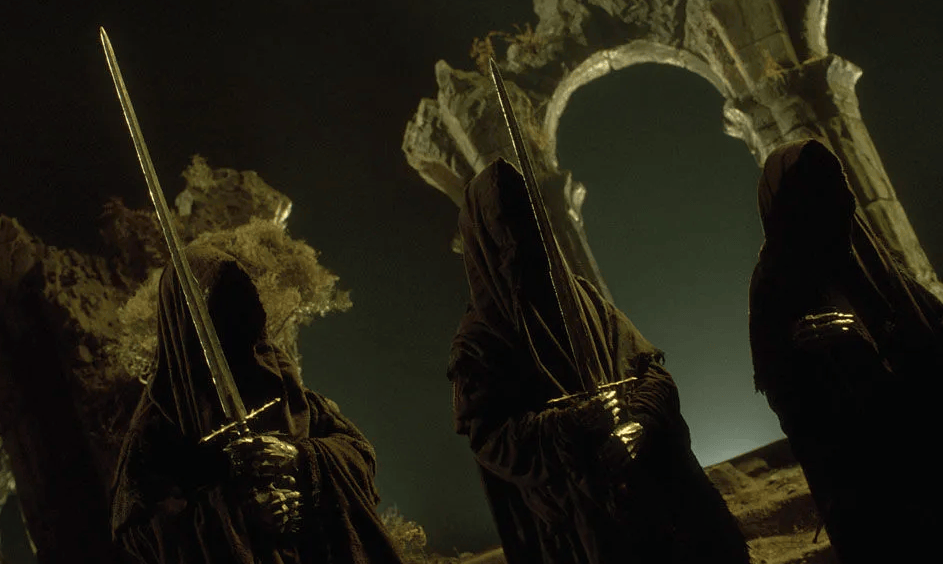
- All that said, I enjoy watching pre-Nazgûl while they’re still normal men, at least in theory. I’ll come back to that.
- I wasn’t thrilled seeing Mr. Lossoth pull this move nice and slow:
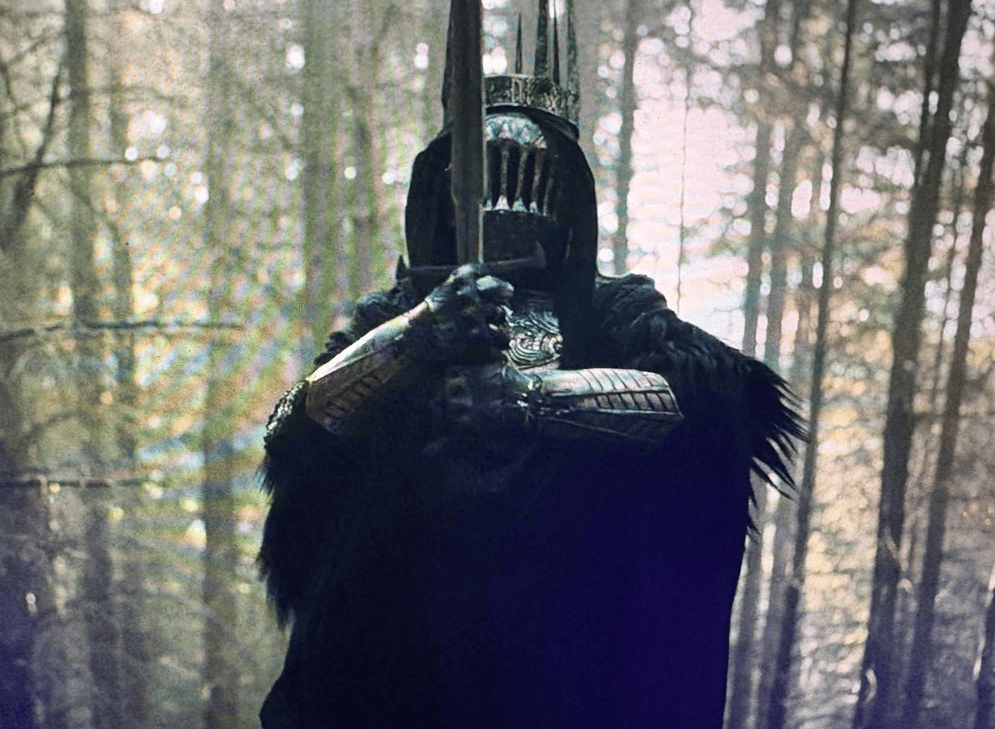
- Like it’s this long-established Naz-gestûre. This guy hasn’t been a Ring-servant for very long, and I don’t think Sauron has conducted a training program for these guys yet. Heck, he’s still adding members to the team. So what is this, other than Jackson callback #577? Can’t RoP do its own take on Nazgûl? This guy is obviously a warrior. He should be fast and fearsome; you’d have to be, to defeat Galadriel, surely?
- Back to Mordor.
- I know I just have to get over some of these choices. Like having a self-doubting Sauron plagued by the imagined ghost of Celebrimbor, Sauron who is a Dark Lord in need of therapy.
- I do think seeing the skeleton of Celebrimbor was fitting, though. Cool and wrong. It’s not so crazy to think his corpse has been hauled to Mordor just to decorate Sauron’s workshop.
- The delegation from Rhûn. Okay, so this is cool, on the surface. I like the idea that Sauron has been sending out emissaries of his own this way and that for a while. Five years is a rather short period of time, but whatever, that’s RoP time compression always at work. It still fits and breaks no book lore! But I was hoping for a richer story from each of the men who will become the Ringwraiths: A slow corruption through the influence of the Rings of Power given to them; wealth, power, sorcery, immortality, whatever he promises.
- But . . . having small little groups fight like impromptu gladiators right there in Sauron’s little throne room is rather uncouth and uninspired, if you ask me. I think it’s thinking small, when I want any adaptation for Tolkien to think big. I wish the Nine came from more sophistication and cunning. Oh well.
- Here’s something I do like, and I was hoping we’d come back to: The idea that there’s this culture of men in Rhûn (the Gaudrim) who had some kind of disease or curse—or at best, some unfortunate skin condition—is a good one! And the idea that someone’s magic could be offered to “cure” it is a good one, as a reward, to coax them into service. I like that this came up again. I have forgotten whether the curse came from the Dark Wizard originally.
- Rivendell looks good. No complaints there. I wish they called Imladris. I wish we heard more Elvish.
- Galadriel dreaming about Sauron is some continued BS. At every turn, her every complaint about him and his growing power is irritating because in this version of history, she is the one who brought Sauron back to Middle-earth and then in among the Elves. She’s second only to Sauron himself in complicity, first through how easily she was fooled, then through the sheer irresponsibility of not telling anyone until it was way too late. I don’t think I can ever look past that serious defamation of her character, and I don’t think they can turn that around. She’ll always be the one did this.
- Kemen remains perfectly punchable!
- While I think there’s a lot to work with when it comes to Theo being lured towards evil, I do think the way they’re doing it now to be lazy. He’s had both Men and Elves on his side before, his mother was killed by orcs, yet because these Númenóreans are mean to him, he’ll turn and side with Sauron altogether? It’s not enough. I hope they make this more nuanced.
- As always, the ability to just teleport in a flash between one location and another is astounding. Pelargir (a coastal haven) to Barad-dûr in Mordor? That’s no little jaunt.
- Okay, back to Durin and Disa and Khazad-dûm!
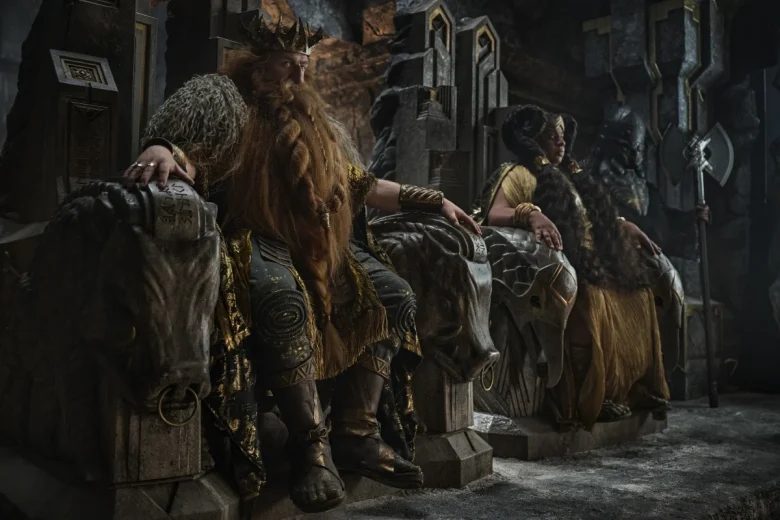
- As always, I really enjoy the interactions between Elrond and his Dwarven friends. Still a highlight of the show. Instead of The Lord of the Rings: The Rings of Power, why couldn’t this series be The Lord of the Rings: The Durin’s Folk? Literally, just name it after that section in Appendix A. Oh well.
- As for Thráin, the brother who somehow hasn’t appeared until this season, I’ll reserve judgment. On the face of it, he seems fine. I’m all for more dwarven interaction.
- Dwarf-women every which way. Some of them, like some of the men, look goofy, but for the most part it’s all good. I’m glad to see more facial hair. But . . . this is by far the dumbest line in the episode, and it absolutely kills what little suspension of disbelief I can muster for this Middle-earth, in reference to the “marvelous beard” of Lady Freyja:
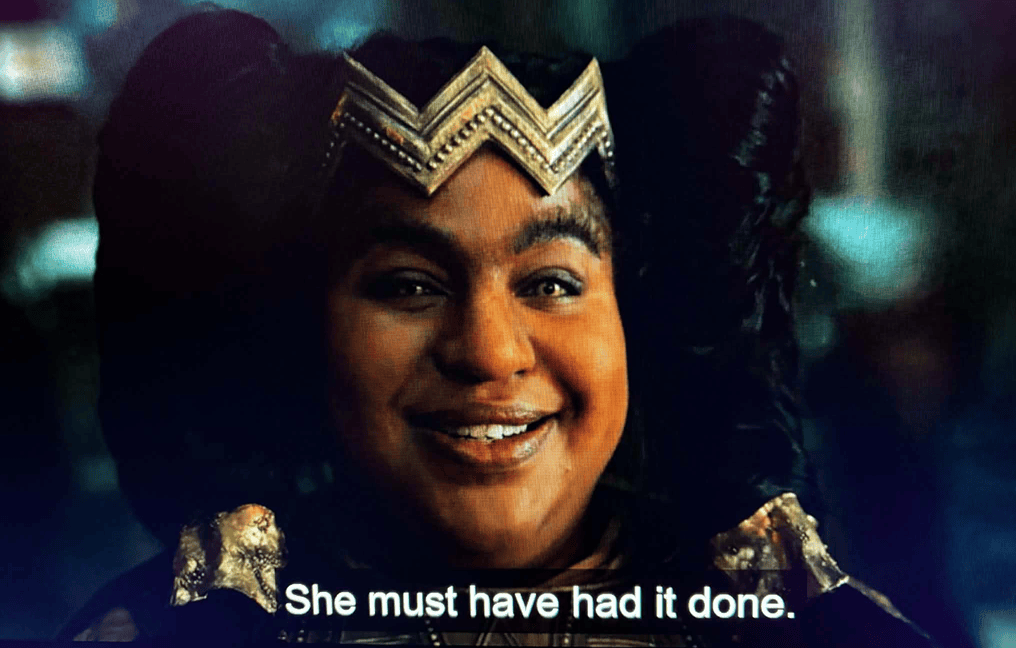
- Worse coming form Disa, who so far has been a delight and a break from plenty of stereotypes.
- But it’s a minor point. Let’s move on.
- I do like the idea that Durin is “smuggling” weapons to Elrond. It seems a little extreme that this would be grounds for a struggle of succession between the brothers, but there’ll surely be a lot more to it.
- The orc (I assume that’s Marnûkh) showing up right at the door to Khazad-dûm (without getting shot immediately?) is a bit gutsy.
- This is far more bothersome: that the Three Rings provide their wearer’s convenient plot information, just free visions of what’s going on somewhere else. “Did you see it? The Orc?” Also, it’s made clear multiple times in The Lord of the Rings how secretive the Three were, and even most Elves didn’t know who had them. Is that all out the window here, or are we to accept there simply a time when it was common knowledge? The bearers are not very subtle about this.
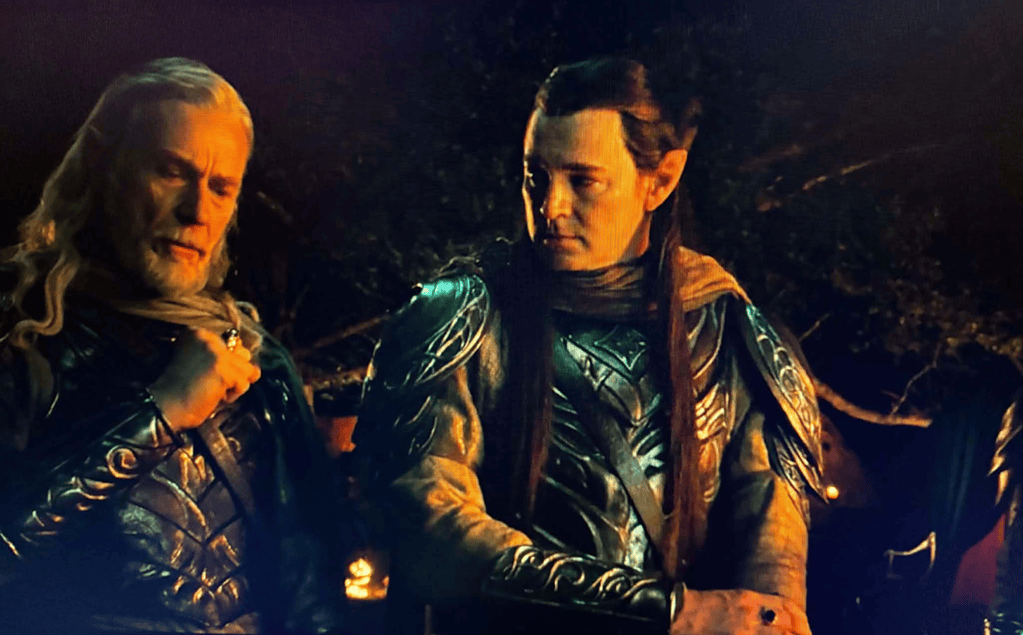
- Given this series represents a kind of prequel to The Lord of the Rings itself, there’s a game my mind is constantly running. For every change or invention the show makes, I ask: Is this something that should be in recorded history? Something Elrond might have mentioned in the Council of Elrond? Or Gandalf mentioning to Frodo? In the very least, is it something that should be in the Appendices? Or is there a reason why it was left out?
- Disa making a remark about another Dwarf-woman having her beard “done”? Cringe-inducing but inconsequential to history.
- How about Bronwyn and Theo> Whatever becomes of Theo, I can absolutely see his identity getting wiped out or forgotten by the end of the Third Age, so I don’t think it’s a big deal that he existed and played his part. There need be no mention of either them. It makes sense we don’t read about them in the Appendices.
- What about Arondir? They seem to be positioning him into a storyline of important. So why is he never mentioned by anyone in the era of the War of the Ring? Will he stay under the radar? Maybe! Maybe it will make perfect sense.
- What about Nori and Poppy, and their part in helping Gandalf figure out he is Gandalf and that he’s not, in fact, evil, but “good”? Would they have been written or sung about later? Probably not. I can buy that. As silly as the Stranger/Gandalf storyline has been, it does less harm to history and lore (so far) than, say . . .
- Galadriel bringing evil back to Middle-earth, or Sauron visiting Númenor with her before he rose to power.
- But Gandalf isn’t one to go telling his story to anyone, not even his close friends. He wanted the Shire protected; why would he go spouting about some Second Age proto-hobbits he’d known? But when he’s recruiting Bilbo at Bag End, sure, I can well imagine him remembering those harfoots who helped him, and telling no one about it. They wouldn’t make it into recorded history.
- But a Balrog waking early and affecting the kingship and succession of Moria long before it wakes up a second time to wreck the place? That’s problematic. Something of that should have at least ended up in the Appendices or Tale of Years.
- The bottom line: Whatever the show does, it needs to leave alone the way things end up. When you read the narrative of The Lord of the Rings, the story shouldn’t be filled with conspicuous moments where we would be asking, “Why was there no mention of Gil-galad doing that? Why does no one say that the Three Rings could heal, cause visions, and even scry faraway places (like palantíri)?
- Finally, when will this be a meme? This episode has a few worthy shots.


2 responses to “RoP : S3 Ep 1: Marnûkh”
I cringed pretty hard when Galadriel and Celeborn’s meeting was portrayed identically to Beren and Luthien’s (except sparring instead of dancing, because Galadriel is a Strong Female Character™). Seriously, they couldn’t come up with any other way for lovers to meet without coopting the most famous (and personal to Tolkien) love story in Middle-earth? And to add insult to injury they also have the lovers stare into each others eyes, frozen, while the rest of the world moves on without them. Because it’s not enough to rip off Beren and Luthien, we have to rip off Thingol and Melian, too. Two for the price of one! (Side note, and due to rights issues we won’t get the answer, but do we know which origin they’re going for with Celeborn? I would say kinsman of Thingol but he appears to be wearing the star of the house of Feanor (which this show seemingly is using for all the high elves, or at least the house of Finwe).
I finally realized what bothers me about the dialog. In normal speech, the actors speak with either their natural accent or whatever accent they’re doing for their characters. But whenever they say an elven word they aggressively trill the Rs. So aggressively that I have trouble understanding them without subtitles. I wish they would use the same amount of trilling (preferably less, so one can actually understand them, Tolkien’s own pronunciation instructions notwithstanding) throughout their dialog so the elven words come out naturally and not as stilted.
The other instance of fast travel this episode is even more egregious than Pelargir to Barad-Dur, as Elrond leaves Moria the evening before the audience, returns to Rivendell, and dispatches more couriers who reach Moria that same evening. Unless I missed something to indicate there was a passage of time between Elrond’s visit and the audience with the dwarven lords?
I agree that Rivendell should be called Imladris. Sauron shouldn’t be calling the Grey Wizard “Gandalf” either, but they’re kind of stuck on this one since in the passage in which Gandalf lists all his names he explicitly says he doesn’t go to the east. Such choices were made to make people make connections to the Jackson movies even when those movies depart from the books. For example, Celeborn envisions spiral stairs in what will eventually become Caras Galadhon. But the book version of the city has only ladders, not stairs.
To end on a more positive note, I like how Elrond is depicted as a healer, which is much more in line with his book counterpart than the “young politician” from the previous two seasons. Is this also the first mention of Elros?
LikeLike
I don’t know if Elros has been named before, but he has been “shown” before in that tapestry/mural in Númenor. I’m already bracing for how they handle Elros, presumably in flashbacks.
LikeLike