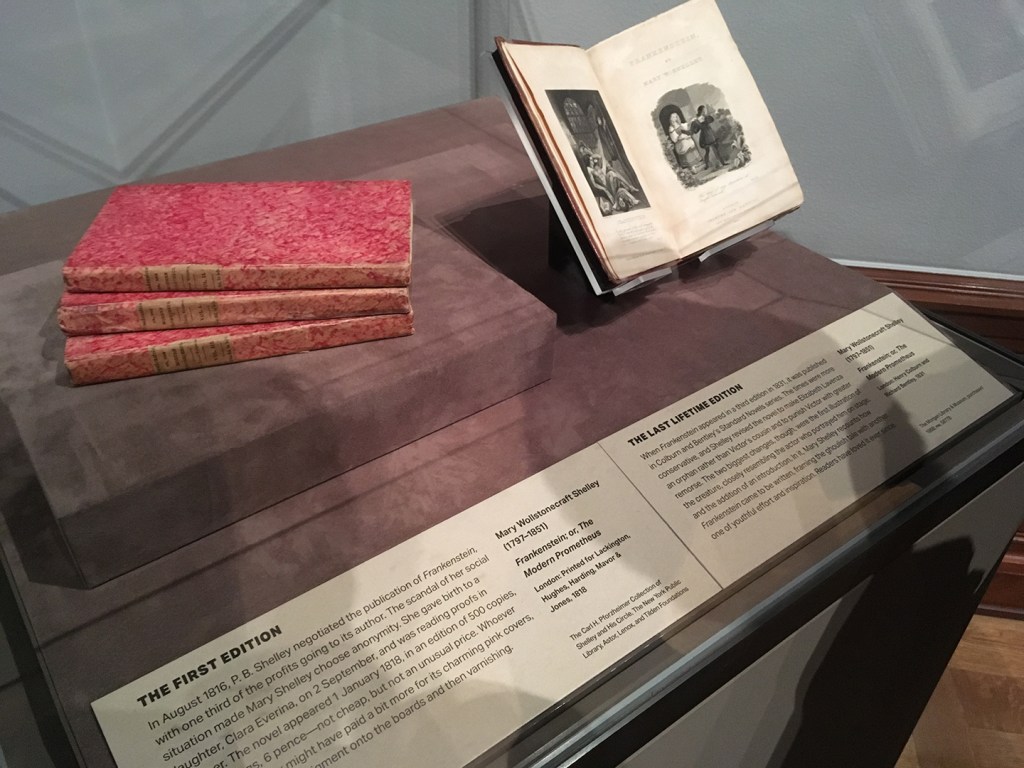
I am a big Frankenstein fan. The novel foremost, but also its legacy. A few years back, I went to the Morgan Library here in NYC and got to see an exhibit there all about Frankenstein, marking its 200th-year anniversary.
I’m invested in its ideas, and where it came from, and how it ties into other legends and folklore, like the Golem of Prague or Talos of Greek mythology. And ultimately, these stories tie back into what makes us human, and what mysteries drive us. So I care about how the concept of the created man plays out in each new incarnation.
Like Guillermo del Toro’s new Frankenstein.
I admit, I’m a bit surprised at how polarizing it seems to be. All the buzz, but especially all the criticism, has revealed how many book fans are out there, I guess, which is great. If there was no book at all, and this was just a film in isolation, it would be fantastic all by itself. But Mary Shelley did write an amazing novel, a richer story than this film gives us, and it’s impossible not to consider the source.
This isn’t Boris Karloff’s monster. Or Robert DeNiro’s or Bela Lugosi’s or Christopher Lee’s. When it comes to the monster, visually, this film is probably closer to “accurate” than we’ve ever seen before. But the more I think about the film, and all the other characters we’ve been given, the more I think about the book.
The production, themes, and cinematography have been talked about well enough by people far smarter than I am, or people more in tune with literary analysis. In the end, I’m just an enthusiast. I’m no scholar of Gothic literature scholar. Just a fan. Just like with Tolkien.
Right, so let’s talk about it. Spoiler alert, I guess?
2025’s Frankenstein
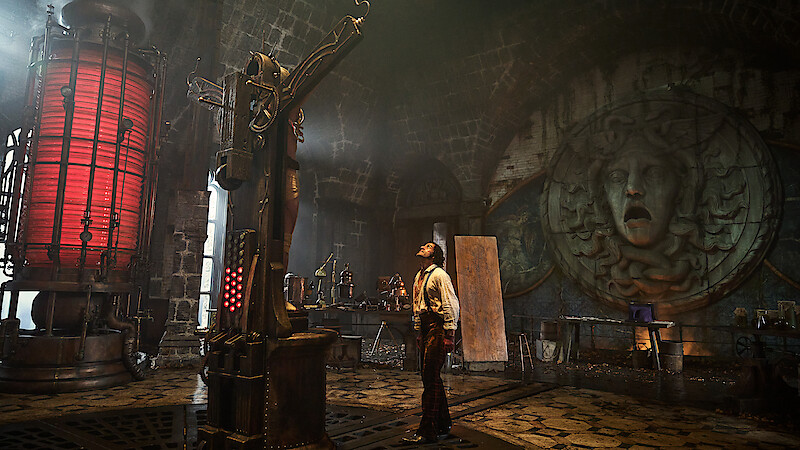
Del Toro’s Frankenstein is an experience. A visual fantasy. There’s no dispute in that whatsover. Ninety percent of this movie is pure del Toro dreamscape imagery that sucks you in (and maybe ten percent Bridgerton-looking fluff). I am a big fan of his older films and his visual storytelling has been masterful. In particular . . .
- El Espinazo del Diablos (The Devil’s Backbone) – Love a good ghost story.
- El Laberinto del Fauno (Pan’s Labyrinth) – I love this one so much. That opening theme haunts my head all the time.
- El Orfanato (The Orphanage) – Even creepier, cooler ghost story.
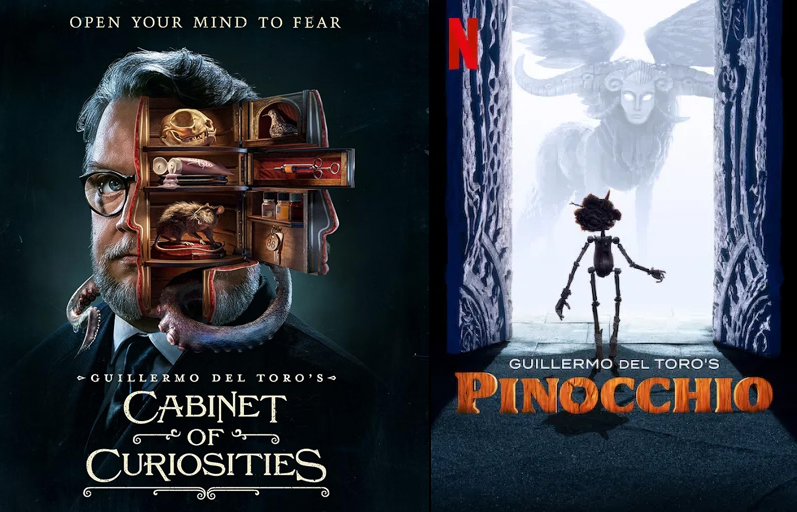
I was less impressed with his later work, even Hellboy (except for the cool visuals), but I was especially disappointed in Guillermo del Toro’s Cabinet of Curiosities. Those stories lacked the depth of the Lovecraftian tales they were reworking. Now, 2022’s Guillermo del Toro’s Pinocchio, was actually pretty good, even if it, too, deviated a lot from the original story.
Notice both of those projects have del Toro’s name right in the title? I wish they’d done that with Frankenstein.
Yes, a book purist lurks within me, but I try to keep it locked in my basement like the Babadook. I dislike gatekeeping. I understand what adaptation entails, and it almost always involves modification to the story. This is just the way of things.
That said, I found del Toro’s film was more of a Frankenstein reimagining than a retelling or adaptation.
Sidebar: I’ve come to wish that the titles of movie adaptations were more honest. That they at least reflected the deviation from their source materials. For example, I wish that this movie was called Del Toro’s Frankenstein so that at the outset, we understand that it’s a new story deviating from Shelley’s own by quite a lot but is still more or less based on her original. Just like 1992’s Bram Stoker’s Dracula would have been more honest if it was actually titled Coppola’s Dracula or something.
A few examples I appreciate:
- Blade Runner is an adaptation of Phillip K. Dick’s Do Androids Dream of Electric Sheep?
- The Thing is an adaptation of the short story “Who Goes There?” by John W. Campbell Jr.
- Babe is an adaptation of a book titled The Sheep-Pig.
- Soylent Green is a film adaptation of a novel titled Make Room! Make Room!
I believe re-titling puts some distance from the source material and gives you more license to make changes from it. Now, I do understand why this is rarely the case, even if I disagree with it: It’s all about branding and name recognition, not authenticity. Branding is everything in the modern world, from media to politics to religion. It sucks, but that’s where we’re at. I’d have preferred it if Peter Jackson had titled his Hobbit trilogy something else. There And Back Again or whatever, so we wouldn’t think it’s a direct translation of the novel. Might have spared the internet a few thousand fewer complains.
Ehh. Maybe not.
Back to Frankenstein. Del Toro’s take is cool for what it is, and that’s an enjoyable film with an intriguing Creature. The acting is excellent, the drama extreme, the script a bit more meh.
It’s not Mary Shelley’s plot by a long shot. This one follows only a few fundamental beats of the original novel: Victor is scientifically brilliant; Victor creates a dude; the dude isn’t what he’d thought it would be; in their struggle against one another, people get hurt; and oh yeah, creation and creature do both end up in the Arctic circle and yap at a ship captain.
Del Toro’s story is easy to follow. Mary Shelley’s is filled with nuance and morals that shift and slide into each other and ask questions of us. It allow readers to wonder and discuss! It’s not a self-answering tale, not completely. Frankenstein is the ultimate book club sort of book. You can interpret and debate and pick favorites. There is so much back and forth between Victor and the Creature. Both actually make compelling arguments. Shelley wants you to see both POVs. She does it so well, just like Tolkien excels at depicting two characters in debate while not clearly siding with either one. Victor isn’t the monster; both he and the Creature bring out the worst in each other. Both sin terribly but aren’t unconscionable monsters.
The Creature enters the world with no violent impulse. It’s the fierce rejection of first his creator than other humans who see him that make him so desperately lonely and bitter. He is forced to learn how to speak by watching (and helping) others, and he exhibits kindness and compassion only, until he gradually discovers who he is. Each phase of his story is meaningful and philosophical. Del Toro’s version fast-tracks all of that so that it could fill in a new background for Victor that sets him up as a “monster” even before he makes one.
He sulks and broods like movie Denethor. Might as well give him a cherry tomato to slurp on.
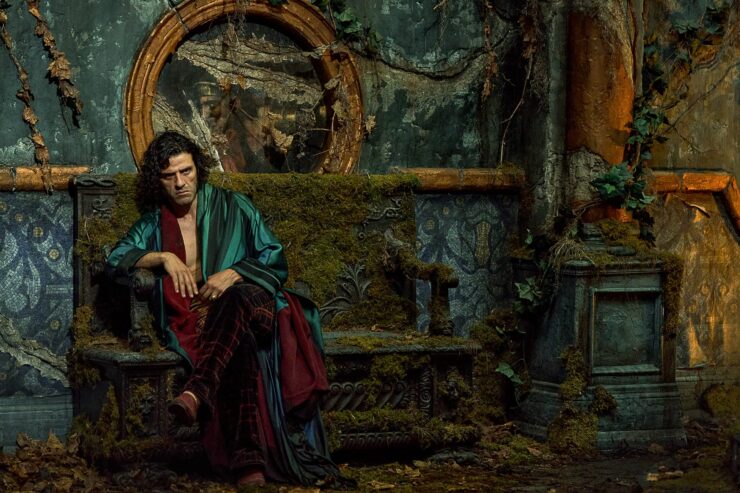
Meanwhile, del Toro’s story does not leave room for interpretation. He makes judgments and then has the actual characters say them out loud for us. He’s so caught up by the base idea (making monsters) and the gorgeous setting (and so are we!) that he loses the plot. And it could have been great. I wanted it to be. It was really good. It was not great. It was not the new definitive Frankenstein film it could have been. In his hands, oh man, it could have been.
I don’t think Del Toro doesn’t misunderstood the original. His choices in this film seem rather deliberate. It’s just a very different take, and one that doesn’t trust the audience to think too much.
Also, this film couldn’t seem to make up its mind about the Creature’s innocence. It takes pains to make sure that the deaths of William (Victor’s little brother) and Elizabeth (Victor’s love interest) are accidental, or at least collateral, and are mostly laid at the feet of Victor himself. Watching it unfold, we blame him instantly, not the Creature. And yet we see the Creature also kill six men of the ship’s crew—barely in self-defense, as he is strong enough to merely shove people aside and accept all gunfire. He also rips the jaw off one of the hunters from the cottage (just a gratuitous moment of gore). Very strange mix signals. Generally speaking, the film wants us to empathize with the Creature entirely, but then it presents these throwaway kills. These things particularly sting when compared to Mary Shelley’s story.
Del Toro also added an entirely new element into the mix: the Creature’s inability to die. So it’s not just that Victor gave him life and then rejected him, he also made him immortal (accidentally? it wasn’t discussed), so that he would suffer in his isolation forever. Dynamite couldn’t do him in, certainly not bullets. He regenerates like Wolverine. If this was all a set-up for a new superhero steeped in the Frankenstein story, then that would have made more sense. It was just part of his curse of existence; it wasn’t explored, and Victor, when the Creature said he couldn’t die, wasn’t shocked by that? Just scientifically, shouldn’t this intrigue him? He admitted earlier in the film that he hadn’t thought much past creation. His major hang-up seemed to be that the Creature couldn’t say any word other than “Victor” at the start?
Well, the Creature in the book is tough as hell, and fast, and hideous, and massive.
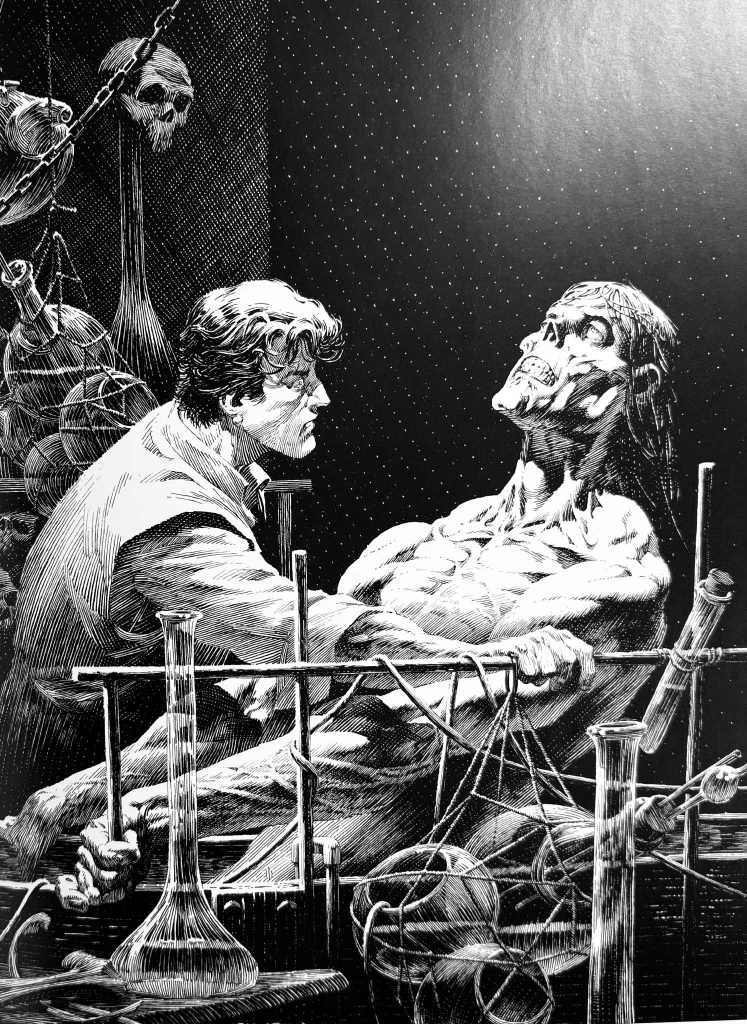
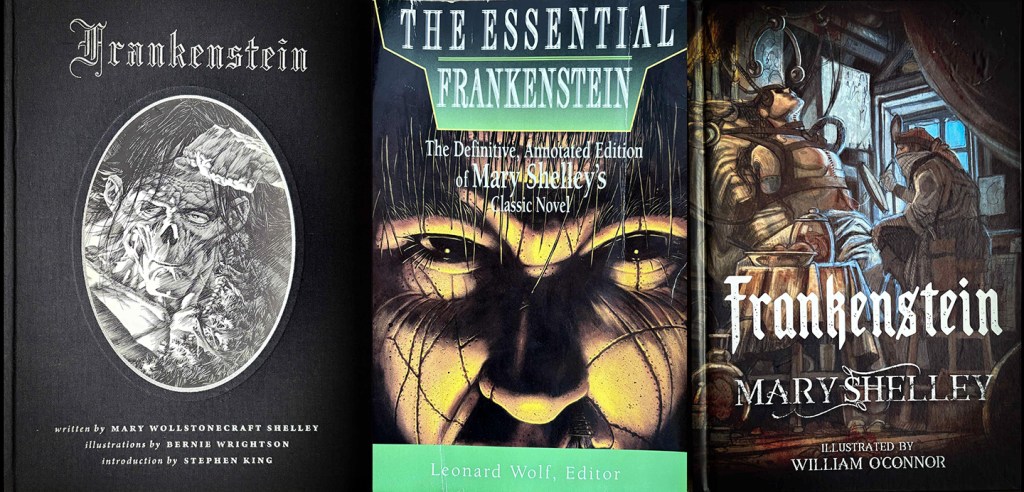
I was bummed that the Creature was as short as it was in this film. Six and a half feet, at most, seven if we’re generous? Some shots made it loom large, especially when hooded, but there were some side-by-side shots that showed it was just a little bit tall. I was hoping we’d get the book statue: eight feet. I was hoping we’d see the Bernie Wrightson illustrations version, which visually looks like the most book accurate. I figured if anyone can pull this off, it’s del Toro. If he can’t, nobody can. Boo.
Seriously, the dude is huge.

Anyway.
Not for the sake pedantry, but for comparison or discussion, here is a non-comprehensive list of story elements in Mary Shelley’s novel that were not conformed to in Guillermo del Toro’s movie:
- The Frankensteins are a wealthy Genevese family. Neither Victor nor his father are barons, and I’m pretty sure their country estate isn’t that massive. (Del Toro’s looked grand and gothic, all right. No actual complaint there.)
- Victor’s father is supportive and loving. No daddy issues. No mommy issues, either.
My mother’s tender caresses and my father’s smile of benevolent pleasure while regarding me are my first recollections.
- His mother does not die in childbirth. She dies, when Victor is seventeen years old, from scarlet fever, which she gets from so closely taking care of Elizabeth (who had scarlet fever first but survived it). She’d already had her second son, William, by then.
- Victor doesn’t drink a lot of milk. There’s no Oedipal or Freudian spin on the situation.
- Elizabeth herself is an orphan who was taken in by the kindly Frankensteins and raised alongside Victor. She’s only a few years younger than he is. She’s never engaged to anyone else. There’s no love triangle shoehorned in to sow resentment between Victor and his creation.
- Victor’s little brother, William, is just a kid when he dies at the hands of the Creature. He isn’t Victor’s dad’s “favorite,” he doesn’t grow into adulthood, he doesn’t get into banking, and doesn’t help Victor acquire materials for his monster-making.
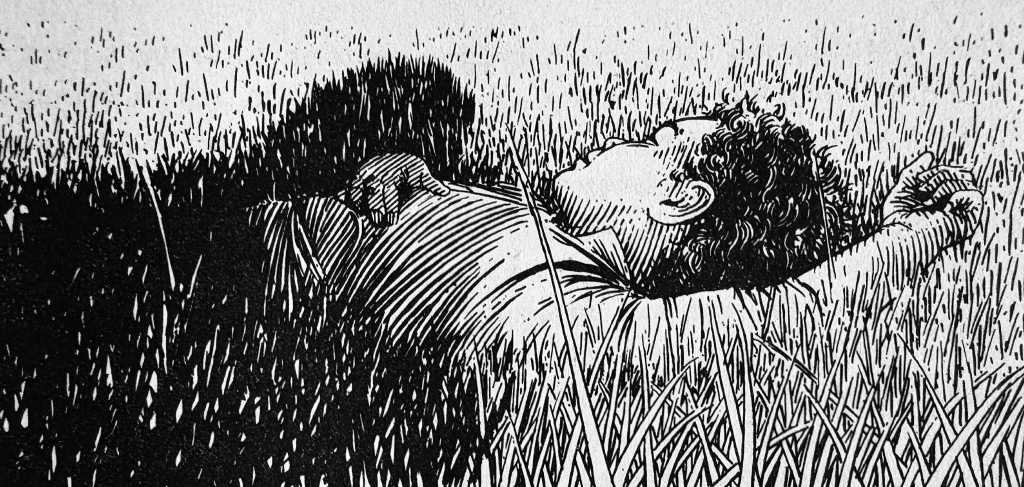
- Victor’s hubris comes from within. He is arrogant, he is a know-it-all, and he does dream big. He is irresponsible, absolutely—that’s his defining character flaw, if you ask me—but he is not cruel.
- Del Toro’s Victor is cruel through and through and obviously designed to make us dislike him. In the book, he grave robs when he must—in this film, he picks out people to mine parts from callously before they die.
- Victor doesn’t boss people around.
- Victor is not a doctor or physician. Not a mad scientist. He’s just a young student at Ingolstadt in Germany when he obsesses over defeating death, over animating lifeless tissue.
- Victor manufactures his creature in the attic of the house he’s living in while attending university. Secretly. He doesn’t construct the body with a big team of people who know what he’s up to. In facts, hiding what he’s working on—and then, later, irresponsibly not telling others about the creature—is a massive plot point!
- Like, it’s the whole thing. Victor is guilty of not owning up to what he made, and thus driving it off with no compassion or instruction or acknowledgment, is his first monstrous crime. Then he waits way too long to warn anyone about it.
- There’s no tower, there isn’t even any lightning.
- That’s more of a Universal Frankenstein trope that’s never gone away. I get why del Toro borrowed that. It is cool. He loves those old films and it’s become iconic. He gets to. It’s fine!
- Victor tells his side of the story to Captain Robert Walton (named Captain Anderson in the film—why’d they change that, too?) while leaving out the details of how he made the monster; so it remains mysterious.
- Victor’s best friend is Henry Clerval and he’s the closest thing we get to a confidante. Henry gets more clues than anyone else in his life about what Victor’s up to in his attic laboratory, and in the end it’s not enough to save him. Henry is essentially Victor’s voice of reason. His Jiminy Cricket; his conscience! And then eventually, Henry is the second victim of the Creature’s wrath.
- Del Toro’s Frankenstein omits Henry altogether. Instead, we get an eccentric, creepy, and wealthy arms manufacturer and war profiteer benefactor named Harlander (who is also Elizabeth’s uncle?). He is a strange fabrication for del Toro’s alternate plot. Which worked fine, for what it was, and he was sufficiently disturbing. Was he a second “monster” for us to consider, further elevating the Creature by comparison?
- Here’s a big one. Nothing goes “wrong” with the process that animates the Creature in the first place. There is no abnormal brain—or “Abby Normal” brain— placed into the monster’s head. There is no bent silver lightning rod to explain the deviance or “criminal” behavior that many adaptations like to imply. The Creature is brought to life just as Victor intended. There were no mistakes or acts gone awry, no defective parts put in. It’s just that when Victor actually succeeds, suddenly that’s the moment his revulsion kicks in.
- Physically—and I will come back to this in a separate post—there is no description in the book of the Creature looking like a cobbled-together thing. This is what we get:
His limbs were in proportion, and I had selected his features as beautiful. Beautiful! Great God! His yellow skin scarcely covered the work of muscles and arteries beneath; his hair was of a lustrous black, and flowing; his teeth of a pearly whiteness; but these luxuriances only formed a more horrid contrast with his watery eyes, that seemed almost of the same colour as the dun-white sockets in which they were set, his shrivelled complexion and straight black lips.
- So Victor intended beauty at the micro-level, but the macro-effect is hideous. He looks like a monster. He’s massive in size, and his yellowish skin might be translucent (scarcely covered).
- Victor rejects his creation immediately. He doesn’t have a single conversation with it. That’s part of the tragedy. The Creature gets zero validation from Victor. He is treated as subhuman from the drop, and he only later experiences compassion from any human when they don’t see what he looks like.
- Like the blind man, de Lacey, and his family of cottagers. This is where the Creature hides and lives for a time. This is where he learns how to speak and eventually read. This is one of the best parts of the book, when the Creature loves and admires this family, and helps them through hard times secretly, at first.
- Del Toro did give the Creature a similar plot thread, hiding amid the gears in the house, which isn’t so much a cottage as a massive lodge. There’s no wolf attack, the old man isn’t killed, and when the cottagers return and find the Creature inside, they drive him off, but they don’t shoot him and he doesn’t rip half of anyone’s face off.
Felix darted forward, and with supernatural force tore me from his father, to whose knees I clung, in a transport of fury, he dashed me to the ground and struck me violently with a stick. I could have torn him limb from limb, as the lion rends the antelope. But my heart sank within me as with bitter sickness, and I refrained. I saw him on the point of repeating his blow, when, overcome by pain and anguish, I quitted the cottage, and in the general tumult escaped unperceived to my hovel.
- The Creature saves a girl who falls into a fast-moving river. He crouches over her, trying to figure out how to revive her, when her adult companion comes running up and grabs her away. The man returns with a gun, shooting the Creature, driving him to run again.
- It takes the Creature weeks to heal that one bullet wound.
- The Creature eventually encounters young William, and tries to befriend him. When he learns he has the name Frankenstein, for the very first time, the Creature commits murder. His anger at Victor plays out. From this point on, he cannot be absolved of being a monster. His actions of violence are few but they are choices he makes.
- Henry Clerval’s is the second murder. Elizabeth is third. Others die around them, not directly by the Creature but by related circumstances. Justine, William’s nanny, is hanged, because no one can prove her innocent of William’s death. And Victor’s father dies in grief when Elizabeth is murdered.
- Elizabeth herself never meets the Creature until the moment she is murdered by him. We have no idea if she spoke with him at all. Probably not. The Creature only came to punish Victor again by strangling her.
- Del Toro does give Elizabeth herself more . . . originality than the book does? I will give him that. It’s a bit too simplified, though, and I don’t think her attraction to the Creature (either as a parent to a child or a woman to a man) is really earned. If we’d seen her spend more time in his company, I think the chemistry would be stronger. She didn’t seem to have an impact on his later development, and that’s a shame. They were doing something interesting with her, but didn’t go anywhere except to provide some Gothic-flavored tragedy and some striking visuals.
- Having her get shot by Victor himself felt cheap. There was no love between them; some early flirtation, at best. Book Elizabeth absolutely loves Victor, and he does love her. She was the ultimate cost of his failure.

- After William’s death, though, the Creature arranges to meet with Victor. They finally have a conversation. This is where their back and forth begins. It’s a dramatic game between them, and it takes place in multiple locations and in multiple chapters.
- Del Toro distilled their entire nuanced and well-reasoned push-and-pull to a single conversation, which concludes rapidly with both William’s and then Elizabeth’s death. So much wrapped up so quickly, when really, their fates, along with the contending words between Victor and his creation, are the beating heart of this story. It was rushed in del Toro’s tale, sidelined quickly and only in a way to make Victor the clear villain.
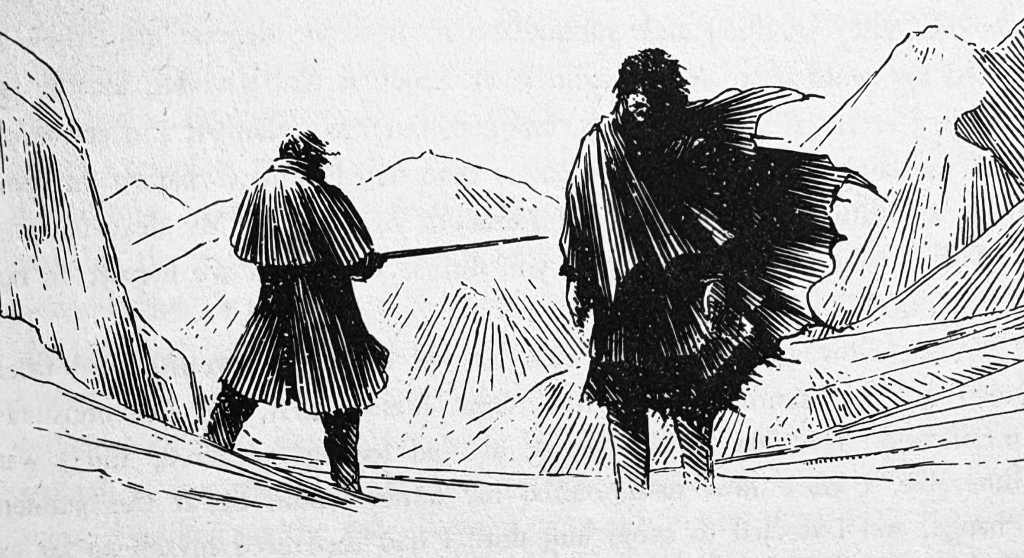
- In the book, the Creature actually convinces Victor to make him a female being like him, and Victor reluctantly agrees. He gets far with it! He does the process all over again, makes a new creature (in a different location). Still towers, no lightning. He already knows the formula for animating life; he just needs to make the body. But, fearing the implications of a mate for the Creature and the possibility that he’s dooming humanity by creating a propagating superhuman race of monsters, destroys the “bride”‘s body.
- I was surprised to see Guillermo del Toro go nowhere with the idea of the bride. It was brought up briefly as a concept in the dialogue, and then Victor dismisses it out of hand.
- The destruction of the Creature’s companion triggers the third act. This leads to the remaining two direct murders committed by the Creature. He harms no one outside of those dear to Victor, since that wounds him more than hurting Victor directly.
- Victor does eventually pursue the Creature to the Arctic north, as though their opposition has led them along a long chase and finally concludes there.
- Victor dies from exhaustion and exposure. That’s when the Creature shows up. They share no words. But he does speak briefly to Captain Walton. He says that he will consign himself to a funeral pyre upon the ice and departs. We don’t see it actually happen, so it’s a little bit of an ambiguous ending.
Oh, there’s so much more, of course. When I watched del Toro’s Frankenstein, I enjoyed it. I think a lot of people will. But I also know and love the book, and all its ideas, and so I can’t not miss what this film didn’t do. It makes me appreciate the book all the more, and wonder if we’ll see another film just go for it, and try to plumb the depths a bit more. But if not, that’s okay.
Oh, and hey, was it just me who kept seeing other characters in Jacob Elordi’s monster?

Please do not misread my opinions as the raving of some cranky disliker of anything that’s not the original book. No way! I think there are and should be tons of other books, stories, films, and shows that take pages from Frankenstein and then do new things with them. (But call them something else, why don’t they!) We needn’t only stick to the original story only.
And if you liked this film, or were moved by it, that’s cool. I was, too, in little fleeting bits. I am just far more moved by the book. Same is true of the Hobbit and Lord of the Rings films. I love them, and they take me for a ride and get me under their spell. But it’s the immersion into Middle-earth, achieved by the book, that’s the real sell.
You know what’s a great show I’ve been meaning to rewatch that’s more memorable than del Toro’s Frankenstein, but also stars Sean Bean and the reanimation of dead tissue? Frankenstein Chronicles! Seriously, it’s good. Check it out, if you haven’t. I daresay, it’s what grimdark should have been. I only wish there was more than two seasons.
My next post, though, will be about a Frankenstein pet theory I have rattling around my brain-pain that no one else seems to share.
 Foreshadowed and Foresung
2 responses to ““I expected this reception,” said the daemon. | A short review of Guillermo del Toro’s Frankenstein”
[…] Maybe it’s just me. Maybe it’s not? The recent Guillermo del Toro film (which I wrote about here) takes the popular approach on this […]
LikeLike
[…] my relative disappointment with Del Toro’s Frankenstein*, I established in my mind—and in a post on the subject—a new expectation, a new rule, that I absolutely know Hollywood would never follow because cash […]
LikeLike