Although J.R.R. Tolkien famously disliked allegory, he admitted there is always applicability to be found. Anyone who reads his work with any bit of care or critical thinking can find a thousand applications to the troubles of our real world—what he called the primary world. Here is just one I recently across again.
In the book Unfinished Tales of Númenor and Middle-earth, there is a story titled “Aldarion and Erendis: The Mariner’s Wife,” which tells the story of the sixth king of Númenor, his betrothed, and their legacy. It’s a bit of a tragedy, a foil to the romance of Beren and Lúthien (and Aragorn and Arwen), and it takes place during the Second Age (The Lord of the Rings takes place at the end of the Third Age).
Now, Númenor—the powerful island-kingdom from which Aragorn is descended—famously falls and sinks into the sea eventually (à la the Atlantis myth), but it doesn’t do so until the actions of its people and especially its twenty-fifth king cross a hard line. However, the first seeds of that destruction begin with Aldarion before he inherits the sceptre of rulership from his father, the fifth king of Númenor (Tar-Meneldur).
I won’t retell the story here, I just want to point out one fascinating little passage. Some context: The prince Aldarion, like many men of Númenor (as opposed to most women), loves both the sea and ships; he especially loves voyaging and exploring. Not so fond of staying on land much. All to his father’s dismay, because Aldarion loses sight of the fact that one day he will be the king and have duties, and it would be best if he paid more attention to his kingdom and its people more than to his journeys and ambitions abroad.
Aldarion forms a fraternity of like-minded mariners called the Guild of Venturers, and they adore him. He won’t be king for many years to come, but he’s still a prince and his young seafaring bros call him their Great Captain. He’s their hero and lord. The Guild, in turn, become quite popular with the Númenóreans at large. They’re like rock stars. Obviously, the king isn’t happy about this. Tar-Meneldur is a wise king and doesn’t care much for the sea personally—he’s into stargazing and old Elven lore—but he especially dislikes his son’s long absences from kingdom and duty (his voyages span years). Tar-Meneldur himself cares about Númenor first and not his own pride; Aldarion seems to chase glory and adventure, selfishly. He’s no villain, but he has learning to do.
But as I said, the everyday people of Númenor are also really fond of the Guild of Venturers. It even earns the nickname Uinendili, which means “lovers of Uinen.” Okay, so who is Uinen? Uinen is a Maia, one of the divine spirits of the world that might be compared to lesser gods.
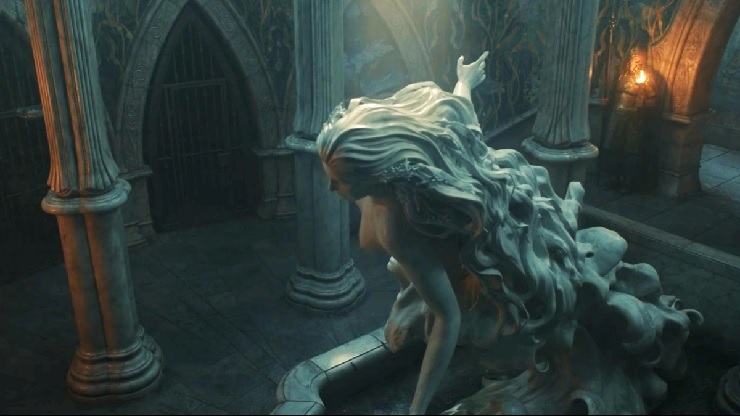
We got a tiny, unearned glimpse of Uinen in statue form (and placed in a city’s undergound prison?) in season 1 of Amazon’s The Rings of Power. Looks cool, but the show generally glosses over the meaning of these visual references and just kind of shoehorns them in without nuance.
But in the books, Uinen is introduced early in The Silmarillion, just after mention of her spouse, Ossë, the Maia of storms and waves (together they serve the Vala named Ulmo).
His spouse is Uinen, the Lady of the Seas, whose hair lies spread through all the waters under sky. All creatures she loves that live in the salt streams, and all weeds that grow there; to her mariners cry, for she can lay calm upon the waves, restraining the wildness of Ossë. The Númenóreans lived long in her protection, and held her in reverence equal to the Valar.
So basically, early in the Second Age, when Númenor is still young (only a few hundred years into its existence), the people (especially the mariners) revere Uinen, and to a lesser extent the Valar above her. The Valar are the greater Powers of the World. (FYI, Gandalf is a Maia; so is Sauron; Balrogs are also Maiar.)
At this point in the time line, the Númenóreans are till relatively humble. They have not forgotten that they received their many gifts and physical talents, their longer lives, and the island of Númenor itself from the Valar, their Maiar servants, and to a lesser extent, even the Elves of the Undying Lands.
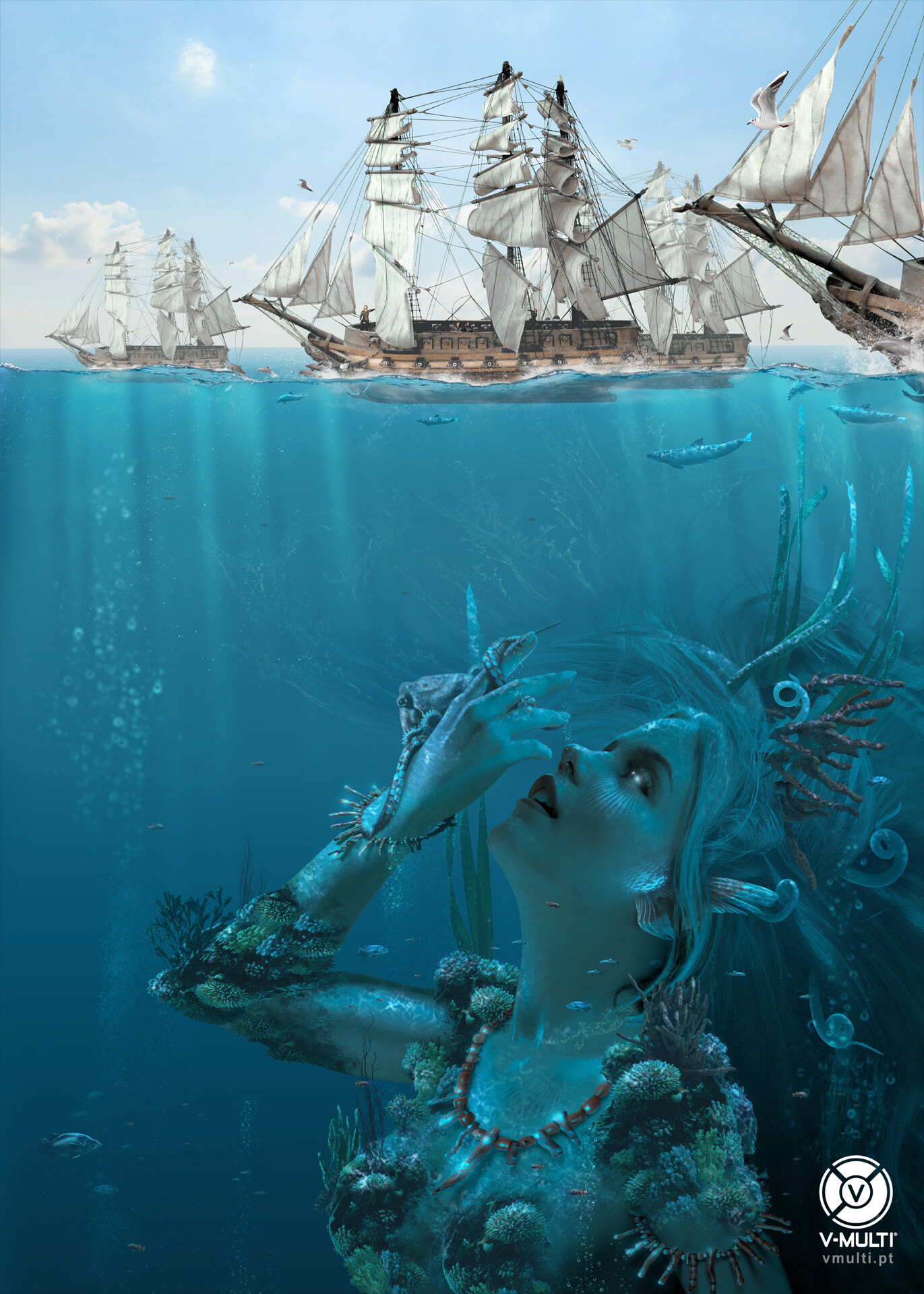
But now we’re up to the fifth king of Númenor and his son. Aldarion himself clearly isn’t reverent to Uinen or any other divinity. He observes the central traditions of his people but he’s not a keen believer in them, since he goes on to break a lot of the customs and laws, and even defy his father’s rulings. In his pride, Aldarion doesn’t respect the grace and protection afforded to him and all Númenórean mariners by Uinen herself. As we were told, the Lady of the Seas is famous for “restraining” her more volatile spouse, Ossë, whose influence would otherwise make for choppier waves and stormy coasts (and, no doubt, the occasional wrecked ship). Not one Númenórean ship founders, though, in all the years so far and for millennia to come. They’re protected by the divine.
But see, Aldarion aims to master the sea, to “deal with” it, as he says to his father. He takes the divine protection for granted, or else considers the skill and safety of his voyages as entirely his own doing.
All right, but what about that nickname for his Guild of Venturers—the Uinendili, the lovers of Uinen? Where am I going with this? Well, it’s about branding. Because the Guild has that name, we’re told, Aldarion, its Great Captain, “became the less easy to rebuke or restrain.” The full quote:
For the Venturers grew in numbers and in the esteem of men, and they called them Uinendili, the lovers of Uinen; and their Captain became the less easy to rebuke or restrain.
So he went on unchecked, setting down the first steps for Númenor to go terribly astray many kings and many centuries later. It begins with Aldarion’s deforestation of a lot of Middle-earth for Númenórean ships, but his successors will go on to be full-blown colonists and tyrants. In the line of irresponsible monarchs, Aldarion is actually one of the nicer ones, I have to say; they get way worse, straying even farther from reverence to the divine powers who have been generous with them.
So what’s my point? It’s very simple. Slap a deity’s name on your favorite group or political party—while showing no actual reverance to said deity, or to what they represent—and the common people won’t dare to criticize you without looking like they’re opposed to the divine.
Does this political misdeed seem applicable to anything in the real world? It does to me. We see branding used in place of authenticity all the time, every day, often from the worst people. This is, of course, just one tiny little sliver of social insight from one of many stories jam-packed with them in the works of Tolkien.


2 responses to “The Uinendili and Political Branding in Tolkien”
Well, I think this is a bit more thought-out that you give them credit. The production designers have gone on record for explaining the decisions around this placement! The idea was that the area that is a prison in the timeline of the show was in earlier years a space dedicated to Uinen (scholarly purposes, I seem to recall, something roughly analogous to a seminary, which is why there’s all these alcoves), but given the new antipathy/hostility to the Valar etc, the area has been forcibly re-purposed for a lock-up. This is also thematically appropriate, because now Uinen, as the Ainu closest to the hearts of the Númenóreans, is isolated and metaphorically locked up. She has been replaced by a blind, even militaristic, “the sea is always right” mantra that ignores the special relationship that Tolkien describes Númenórean sailors had with her. We still see Elendil’s ship depicted as having the green bough of return, but of course he is one of the Faithful.
I think the show does this kind of production design adaptation in a clever way, especially given the restricted rights, even when other choices don’t sit well with many people. Elendil and Galadriel having a discussion in front of a statue of Nienna (as was mentioned in another bts piece) in S1, and then an obvious though unnamed Nienna relic in S2, hints at the dedication of the Faithful, though their mode of worship may have drifted over the centuries, as they’ve been cut off from the Eldar for generations. A read of the Drowning of Anadûne version of the Númenor story shows how Tolkien experimented with ‘Mannish’ takes on the Valar and how confused their traditions got. No casual RoP viewer needs to know the names here, these little inserts help to provide the cultural background of the political/religious tension that is simmering. And they are nice little nods to the people who know the more extensive source material not available, if one wants to take them as such.
LikeLike
[…] The Uinendili and Political Branding in Tolkien […]
LikeLike