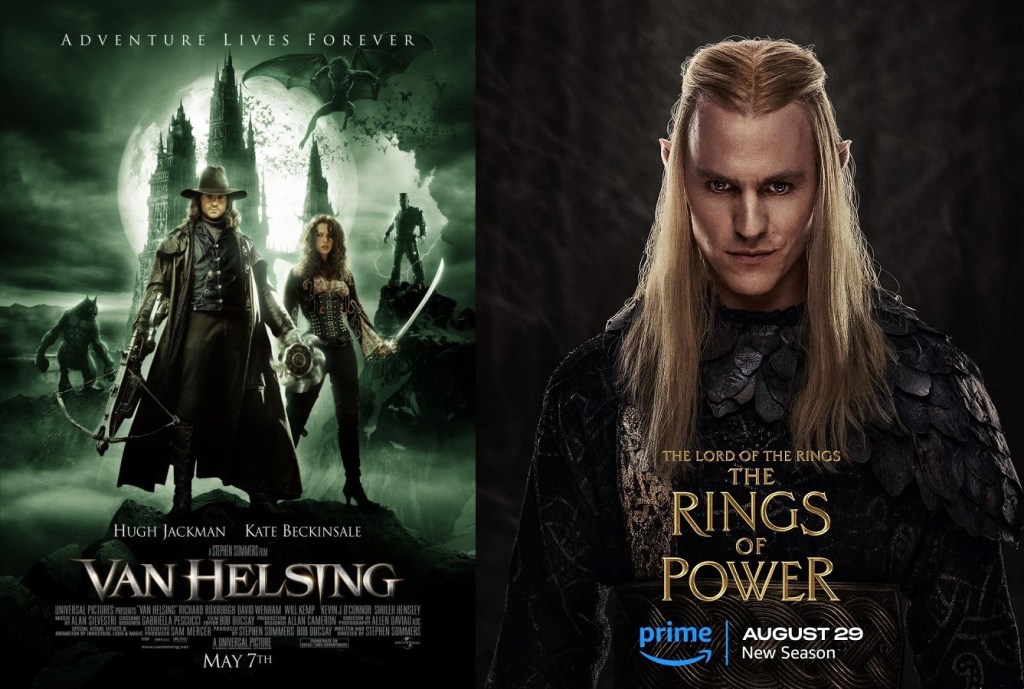
Amazon’s The Rings of Power series is the Van Helsing of Tolkien adaptations*.
Hear me out! This isn’t a hot take. I’ve thought through the comparison a bit. The 2004 film Van Helsing—starring Hugh Jackman, Kate Beckinsale, and David Wenham—is fun and exciting, has some great visuals and action sequences, loads of brilliant costumes, and worthy music. But as a tribute or adaptation of its literary sources, it’s absurd. If we acknowledge that, and what the film is portraying vs. what it’s not, we can absolutely still enjoy it.
Just like The Rings of Power. For posterity, I want to point out that I did review all of season 1 on Reac(tor.com) when the show first aired. I made no sweeping generalizations or preconceived criticisms, and I have often defended the show on certain matters. And I still will. And ultimately, I’m just a fan myself.
- Episodes 1–3: “Concerning Harfoots (And Elves, Men, Dwarves, and Orcs)”
- Episodes 4–5: “A Conspiracy Still Masked”
- Episodes 6–7: “A Wife in the Dark”
- Episode 8: “The ‘King’ Goes South“
While my opinions haven’t changed too much since I wrote those reviews, I do find this moment in time—the summer of 2024—to be exciting and a little nerve-wracking as a Tolkien fan. The animated War of the Rohirrim is coming at the end of the year, the Jackson team has announced more Middle-earth films to come, and now we have season 2 of The Rings of Power about to drop.
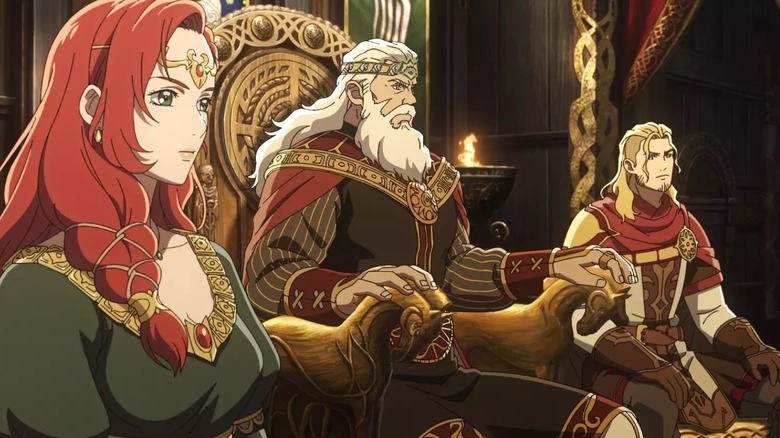
Nothing that happens in any of these mediums will negatively effect my enjoyment of Tolkien’s writing. Still, I do care about how Tolkien is perceived and discussed in the public eye, and all of these adaptations will have their own impact.
So, do the teasers and trailers for The Rings of Power season 2 look cool? Totally. I mean, Entwives! Interesting new orcs. A troll. The dwarves, Disa especially (she rocks, and sings to them, too)! Elrond. More monsters. Are there obvious cons? Oh, heck yeah: I’m not sold on Bombadil’s presence yet (but neither am I deeply discouraged). The whole Saulbrand (Halbrand + Sauron) setup continues to irk me, as does Galadriel’s now deep complicity with the rise of the second Dark Lord. Not to mention the out-of-sequence creation of the Rings of Power and the whole shredding of the Second Age timeline bugs me. The many direct-to-Jackson callbacks are cringe-inducing. Like the dramatic “He is no man” pronouncement (way to be unoriginal with your wording, Jackson’s Éowyn) and the loud bouncing of a magical ring from right to left down a stony incline.

I know I can only speak for myself. But every visual or dialogue callback to Jackson’s Rings trilogy jerks me out of any immersion I might have had; it makes me imagine the showrunners doing a nudge-nudge-wink-wink gesture and thinking themselves clever. To be fair, Jackson himself did terrible callbacks in the Hobbit films to the Rings films.
Despite all that, the fantasy lover in me rejoices. I’ll still take one high production, cliché-ridden, Tolkien-inspired series over any modern grimdark fantasy. But the Tolkien fan in me is braced for continued disappointment. I’m not a book purist about adaptations: In my opinion, Jackson’s films are among the best movies there are, despite their deviations from the source. Really, both Jackson’s and Payne/McKay have made some ridiculous missteps. Can’t we just enjoy them anyway? We can.
I know what adaptation means, and I don’t mistake it for alteration. No screen adaptation of any book can match its source material frame by frame or word by word. Of course not. But some adaptations are still better than others.
Okay, back to my original statement. How is The Rings of Power like Van Helsing?
2004’s Van Helsing was exciting when it was first announced. The marketing involved a dark and mysterious website that I can’t even properly describe and I can’t find a single image of it now. It was too long ago. The concept intrigued me as a longtime fan of classic monsters, Dracula and Frankenstein in particular. I loved Stoker’s and Shelley’s books above all, but I’m not priggish about the adaptations, spinoffs, and pop culture legacies of any of the classic Universal monsters. Heck, give me monster-themed cereals any day!
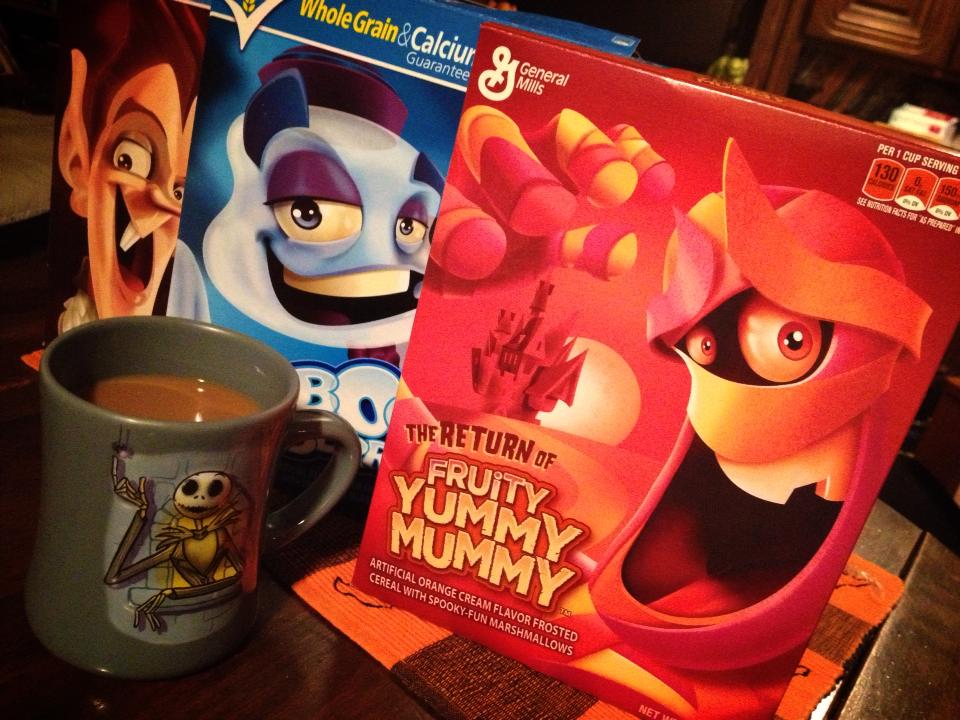
I’ll even take Bela Lugosi and Boris Karloff. They’re not my favorite cinematic actors, but they are icons; influential and probably truly scary in their time. And the characters they protrayed are not exactly the book characters come to life. The old movie plots were thin, lots of characters from the books were dropped, but at least there is a loose parallel between book and film.
Van Helsing
In Bram Stoker’s Dracula, Abraham Van Helsing is a professor who studies obscure blood diseases—Lucy’s spiraling health is why he’s called in by his former student, Dr. Seward. Van Helsing is NOT a monster hunter, and while he does know about the legends of vampires and is quick to believe a vampire is among them, he’s not some world expert. Van Helsing’s pop culture fame as a monster hunter comes from the character’s evolution outside Stoker’s novel. Meanwhile, in Mary Shelley’s Frankenstein, Victor is a young student of science and philosophy. He’s not a doctor at all, nor particularly obsessed with creating life as some kind of life mission; he’s just a young, brilliant, and ambitious academic who wishes to do something great and that ends up being about creating life. Summed up: It’s about a man’s hubris and then a severe misstep in not taking responsibility for what you do. There is no Igor in the book, and the monster is an eight-foot, agile, and highly intelligent creature.

Now, in Stephen Sommers’s Van Helsing film Dr. Victor Frankenstein, along with Igor, made a monster with Dracula’s help. Dracula then kills the doctor; like, straight-away. The master vampire’s long-term goal is to use the technology within Frankenstein’s monster (which I guess he still needed Victor for at first) to bring to life to a vast brood of batlike vampire children. Meanwhile, a man named Gabriel Van Helsing is a wanted criminal but he’s also a dedicated Batman-esque, grapple-hook-shooting monster hunter who works secretly for the Vatican. In the beginning of the movie, he squares off against a giant-sized, dare-I-say hunchback-like Mr. Hyde in the cathedral of Notre-Dame. He later contends with a werewolf and even gets bitten, receiving the lycanthrope’s curse. Later, it’s revealed that Van Helsing is actually the human incarnation of the angel Gabriel, who once battled Dracula in ancient times. The backstory and plot are surprisingly complex and the film does a good job somehow cramming it all into two hours, but of course none of it is drawn from Stoker or Shelley.
Is Van Helsing a fun movie? Sure is! Is it batshit silly, too? Yup. It’s an action movie above all and has a lot of components that are, taken individually, very enjoyable. The sets are delightful; the moonlit night skies are lovely. The atmosphere is brooding but a wee bit too colorful in a kind of Schumacher’s Batman & Robin sort of way. (That’s not really a compliment.) Jackman’s Van Helsing is a handsome, dashing yet grim and gravelly hero. Beckinsale’s Princess Anna, daughter of the “king of the gypsies,” is his lovely counterpart and foil, and every bit as stereotypical as he is. Wenham’s friar Carl is a goofy-as-heck Q-like sidekick whose antics and dialogue strongly undermine the overall gothic aesthetic. The musical score is engaging if repetitive and heavy on the tempo; composer Alan Silvestri understood the assignment. (I’ve played “All Hallow’s Eve Ball” to death in my own Halloween playlists, and “Reunited” is nothing short of lovely.) There’s is fair amount of (unintentional?) overacting and, if you ask my wife, the werewolves look like Scooby Doo (I don’t completely agree).
Oh, and Dracula’s soldier-helpers are vicious little dwarf-like monsters (called dwergi?) who, in retrospect, seem like an evil, armored-up combination of Oompa Loompas and Minions.

It’s . . . not a great movie. But again, it is fun.
The sum of its parts makes it a puerile adaptation of any of its literary sources. Dracula himself is a “son of the devil” diva who claims to be emotionless but laughs and flips out in bursts of emotion—certainly not Stoker’s cold and conniving vampire whose ambitions have outgrown Transylvania. Frankenstein’s monster isn’t mute (so that’s an improvement on Universal’s monster), but he’s still a ponderous oaf and a far cry from Shelley’s powerful, articulate “daemon.” Van Helsing himself is a dreamy but grizzled immortal warrior, not an aging professor with quirky sayings. So, a very far cry from the source material. I don’t think the director or producers ever claimed the film would be faithful to anything, to be fair.
No, Van Helsing is not what I’d hoped it would be, as fan of gothic horror monsters. Its opening scene is an homage to the old Universal films, a black-and-white prologue involving a torch-wielding mob and burning windmill, but Dracula’s antics quickly make it makes clear how much of an odd mish-mash it’s all going to be. But, again, in its defense, the film is never atually trying to run the plots of the novels it’s borrowing from, and the monster crossover is a long-established film trope in itself, à la Frankenstein Meets the Wolf Man (or Abbott and Costello Meet Frankenstein).
Still, imagine if Van Helsing was actually a massive hit, and had legions of fans unfamiliar with the books but love the movie characters. Some fans who seek out the novels will either be surprised or disappointed that in Stoker’s tale, Professor Van Helsing doesn’t actually wield Tojo blades or a rapid-firing, “gas-propelled” crossbow. And maybe, just maybe, some fans would end up enjoying the novels more than the film. But you know what? By naming the character Gabriel Van Helsing (distinct from Dr. Abraham Van Helsin), they were at least being honest and not trying to fool anyone. I respect that. Rename it if you’re going to make it that different!
The Rings of Power
It’s hard to describe the storytelling goals of Payne and McKay’s series. It’s not a proper prequel to The Lord of the Rings because it’s already rearranged events in the First and Second Ages as suggested in the book.

I do wish more people—both fans and critics of the show—understood that Tolkien’s writings that describe and summarize the Rings of Power scheme enacted by Sauron and the much-later fall of Númenor can be found primarily in three places:
- The final section of The Silmarillion (“”Of the Rings of Power and the Third Age”).
- Various segments from Unfinished Tales.
- Bits and pieces in The Lord of the Rings itself, such as from “The Shadows of the Past,” “The Council of Elrond,” and the Appendices.
As far as we know, Amazon still only has the rights to The Lord of the Rings, The Hobbit, and a few unspecified bits granted by the Tolkien Estate—not additional whole books or full stories. The Lords of the Rings itself doesn’t give the reader a solid account of the creation of the Rings of Power. Aside from the Tale of Years in Appendix B, which provides dates, this is the relevant passage:

So that’s mostly what The Rings of Power series has to work with. The writers can’t really run with the actual text relating to the events their show is meant to depict. Which is . . . so awkward.
Image you’re a writer given lots of money and tasked with scripting a series called The Old Testament, but you’re forbidden (for legal reasons) from using any actual Old Testament text as a source material. Instead, you can only use those parts of the New Testament that specifically refer back to events from the Old. But even with that, you can only use the precise New Testament wording. How “faithful” a telling of the Old Testament sagas do you think it will be? Eden, Egypt, Sinai, and Jerusalem are bound to be very different!
So the RoP writers have had to make up an all-new version of Sauron and his ring scheme and even chose to tie it directly to the fall of Númenor. I personally feel that if you don’t have the rights to something, then just tell a different story, not a pretty but convoluted workaround, of an existing and long-established story. But a workaround is precisely what The Rings of Power is. It makes me wonder about the other shows that were pitched to Amazon, over which Payne and McKay’s were selected. I wondered way back in 2018, based around the swirling rumors of a young Aragorn series. I wondered a lot.
So to be clear: In The Silmarillion and passages in Unfinished Tales—where the story of the Rings of Power are actually covered—Sauron starts off in the Second Age as the ambitious but cautious inheritor of his boss’s mantle of evil. The War of Wrath concluded with Morgoth’s removal. In response, Sauron eventually puts on his “fair hue again” and goes before Eönwë, the herald of Manwë (King of the Valar), as though formally repenting of all his past evils, but he does not end up following through with it because he’s not actually sorry. Sauron’s not regretful of the mass murder and cruelty he was party to, or partook of, or enacted himself. He was merely “dismayed by the fall of Morgoth and the great wrath of the Lords of the West.” When Eönwë tells him that, sorry, no, he can’t forgive him, Sauron will have to go face the judgment of the Valar over in Valinor, Sauron withdraws. He realizes that facing Manwë would involve actual accountability, and very possibly a “sentence.” That’s all it takes for him to reject the whole notion of apology, and he falls back into evil all by himself.
Note: He doesn’t need Galadriel’s help for that.
So yeah, Sauron becomes the secret new Dark Lord in the Second Age. His is the true identity, unbeknownst to the Elves, behind the “new shadow” that Gil-galad perceives. The Elf-king knows that this lurking enemy is no mortal man but a “servant of Morgoth” who is stirring and waking up evil things again. He sets his crosshairs on the Elves first. (Side note: There is no line in any bit of Tolkien’s work that even suggests that all Elves’ spirits and souls require a physical substance like mithril to remain on Middle-earth, like RoP devised.) When Sauron does appear in the flesh before Elves, he does so pretending to be someone else: Annatar, the Lord of Gifts, “an emissary of the Valar, sent by them to Middle-earth,” an emissary “ordered by them to remain there to give aid to the Elves.” Galadriel wants nothing to do with Annatar, not trusting him for a second, and neither do Gil-galad or Elrond, for that matter. The Elves do not discover his identity as Sauron—aka Morgoth’s old lieutenant—until the moment he completes the One Ring. Which is a full century after the initial forging of the Rings of Power and ten years after the Three Rings are made, the last of the Rings of Power to be made.
Cut to Amazon’s take in The Rings of Power: Sauron is a near-repentant being who was trying to put his evil behind him by . . . leaving Middle-earth proper and just going way out to sea? His actual return to Middle-earth is achieved only by the continuous coaxing of Galadriel, whom he meets in the guise of a mortal man, by chance, on a raft. When she pushes him to let his past go, he tears up, even when alone, even when no one’s watching him. Meaning it’s genuine. Amazon’s Saulbrand actually cries; we’re meant to feel bad for him, I suppose. He is, in a sense, the melodramatic Dracula who laughs and rants, who helps make Frankenstein’s monster, and who has a whole different M.O. and agenda than Stoker put to paper.
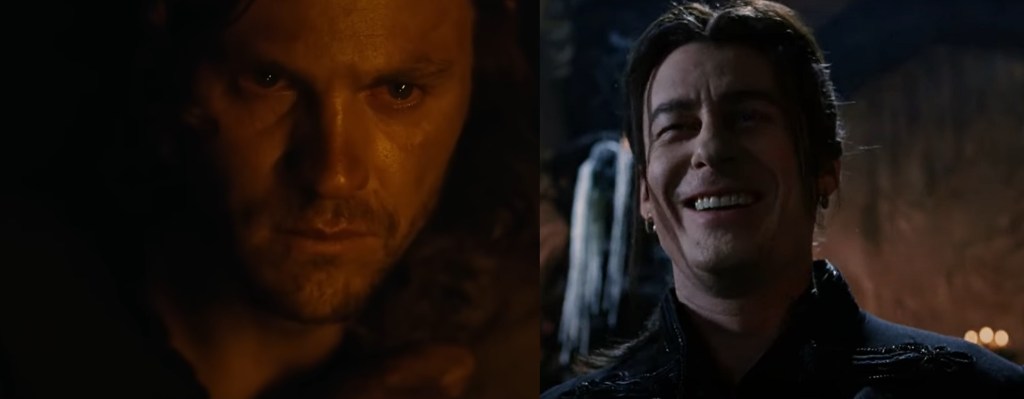
Also in Amazon’s take . . .
- All the Elves of Middle-earth will, without the physical substance of mithril—which has its own “apocryphal” new origin story—have their immortal souls dwindle “into nothing, slowly diminishing,” until they are “but shadows swept away by the tides of time forever.” Very dramatic. This will happen only slowly, as Elrond explains to Durin, but also they need their mithril fix “by spring,” or they will all “perish.” Hurry up!
- Galadriel apparently did not spend most of the First Age as a friend and mentee to Melian the Maia, Queen of Doriath. Instead, she was a soldier in a vague war against Morgoth and rose to the rank of general.
- Her brother Finrod is not the patient, peace-loving, and wisest of her brothers. He’s possibly never a king of his own Elf-realm, a savior of Beren’s, or befriender of Men who helped establish the Edain (future Dúnedain and Númenóreans). Rather, he’s just some Elf who joins up in the war against Morgoth—we never have it mentioned that he’s royalty, or that both he and his sister are relatives of Gil-galad’s. He has a twentieth-century fraternity jock’s haircut and also becomes Galadriel’s primary motivation for hating Sauron when he dies in the prologue. Did not many other Elves die? Why do no other Elves seem to have trauma and grief like Galadriel’s?
- Gil-galad is more of a statesman and politician than a king, and uses a ship to Valinor as a way of removing a obstacle. Galadriel is bumming everyone out and needs to go. By Gil-galad’s own words, sending her away would bring an end “to the last vestiges of war” and maybe “arrest the decay” of a tree in a Lindon that somehow represents the collective fate of all Elvendom.
- Gil-galad doesn’t write his own speeches. Elrond does. He’s not even considered an Elf-lord.
- One of the palantíri of Númenor shows the future, not other places, and Pharazôn gets hold of one, too? It’s like a fortune teller’s crystal ball.
- The Balrog deep beneath Khazad-dûm is awake and angry, and might be coming up ahead of schedule.
- Gandalf—or less likely, another as-yet-unspecified wizard—was flung over to Middle-earth, from Valinor, inside a meteor during the Second Age, and he loses his memory in the process, not even knowing which team he’s meant to be on. This is instead of sailing to the shores of Middle-earth on a ship as a direct response to the return of Sauron in the Third Age.
- Galadriel is, it turns out, only quoting Sauron himself when she says to Frodo that if she were to claim the One Ring, she would become “fair as the Sea and the Sun” and “stronger than the foundations of the earth.” So one of Tolkien’s precious few female characters is just plagiarizing from a dude. Ugh.
And so and so forth and what have you. Gandalf, Galadriel, Gil-galad . . . they are all the acrobatic, bolt-shooting Van Helsing who swings on wires on castle walls and transforms into a werewolf to battle Dracula. And they’ll all look badass when doing it, no doubt. I will absolutely be watching season 2 and beyond of The Rings of Power. I will continue to enjoy it, grimace at it, and engage with friends and fellow fans of Tolkien’s work over it. Just like how Van Helsing has a place in my collection.

*Ohh, to extend my original analogy, I would say that Peter Jackson’s The Lord of the Rings film trilogy is like the Bram Stoker’s Dracula (1992) of Dracula adaptations. It’s more accurate to the book than, say, Lugosi’s Dracula (1931); still not exactly a direct translation of book, not by a long shot. Some roles are mashed together, but the general plot is the same. Dracula himself is scary as heck, and he’s still got the same objective that Bram Stoker gave him. And yeah, they did add in a romance subplot which goes to a depth to the story that the novel does not. But the deep camaraderie—dare I say fellowship?—between Van Helsing and the other good guys (Jonathan Harker, Arthur Holmwood, Quincey Morris, John Seward, and even Lucy herself) is also somewhat lacking in the film.
 Foreshadowed and Foresung
3 responses to “Van Helsing and The Rings of Power”
I really like the comparison of Van Helsing and Rings of Power, it seems quite apt to me. They may not be faithful reproductions of the works from which they’re adapted, but we can take these things for what they are and try to enjoy them. I am looking forward to the War of the Rohirrim and the Andy Serkis Gollum movie, as well. Jackson and Serkis have a good track record and I think those movies could be a lot of fun.
LikeLike
Thanks, Christopher. Exactly right. We can enjoy them, but we do get to make fun of them, too. And occasionally even wipe a tear away, even if it only feels a little bit earned.
LikeLiked by 1 person
[…] Anduin flows on. This was just a Van Helsing, and it’s still fun. I’ll keep watching. And […]
LikeLike